

2400 × 1500 PNGOpen CDN original
Create one character and keep the same face, outfit, style and silhouette across expressions, poses, panels, storyboards, webtoons and video-ready scenes.
Identity prompt
Prompt to result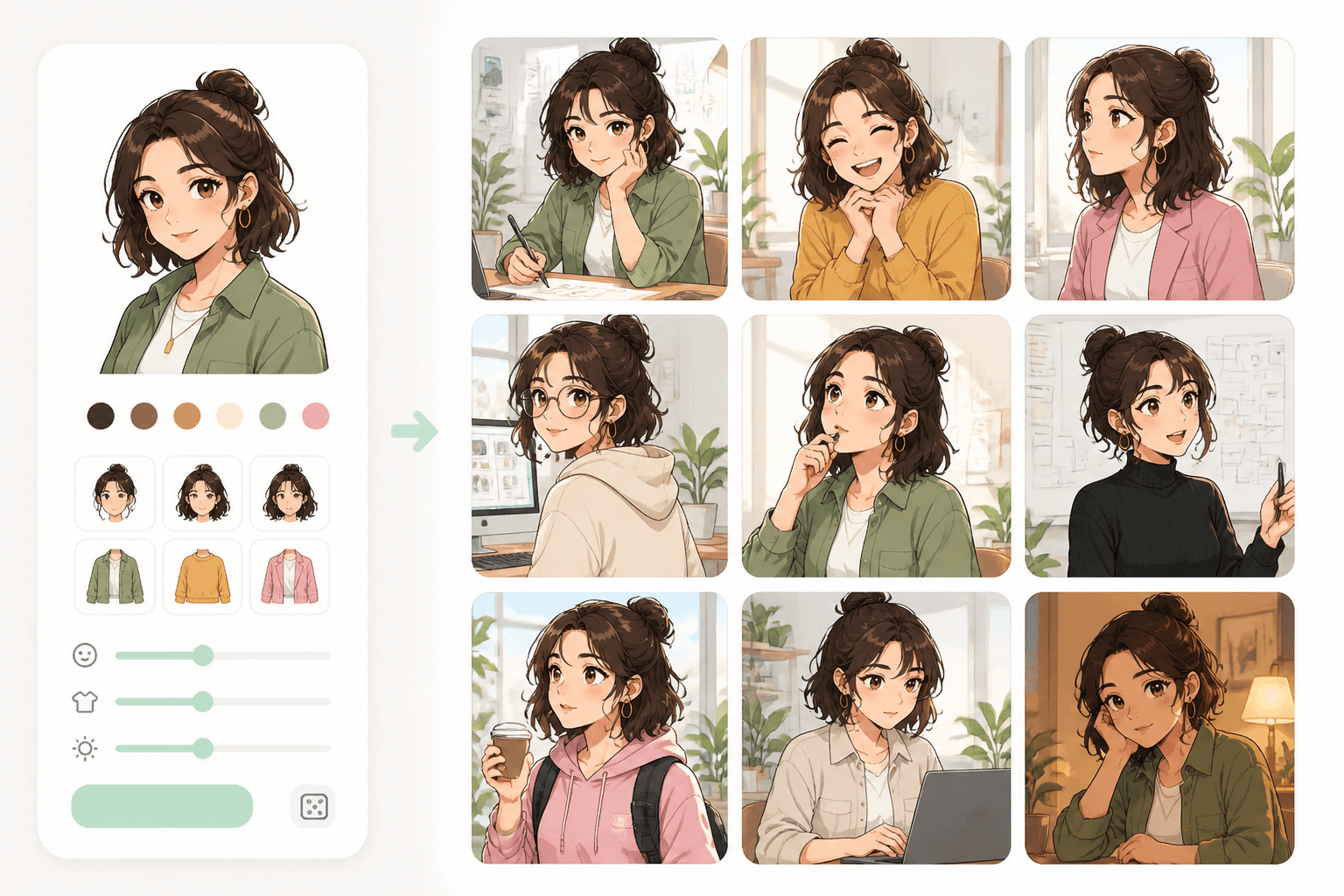
Consistency grid
Same face
across outputs
Story-ready
for panels and scenes
Set face, hair, outfit, colour palette and personality.
Create poses, emotions and scene-ready views while preserving identity.
Apply the character to comics, webtoons, storyboards and video scenes.
Use this workflow when you need the same character to stay recognisable across prompts, scenes and story moments.
Define the visual details that must stay the same.
Review expressions, poses and scene options with consistent identity.
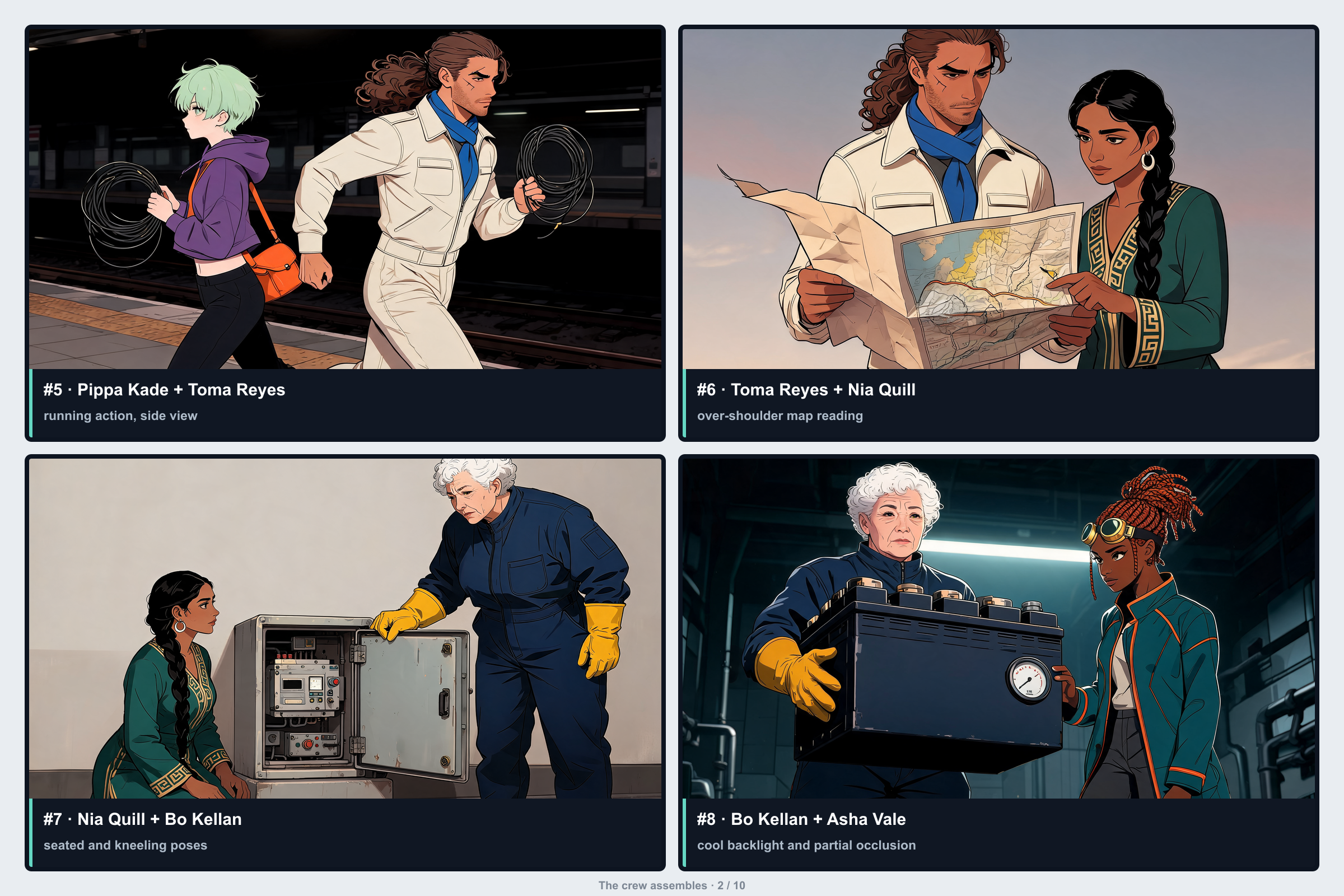
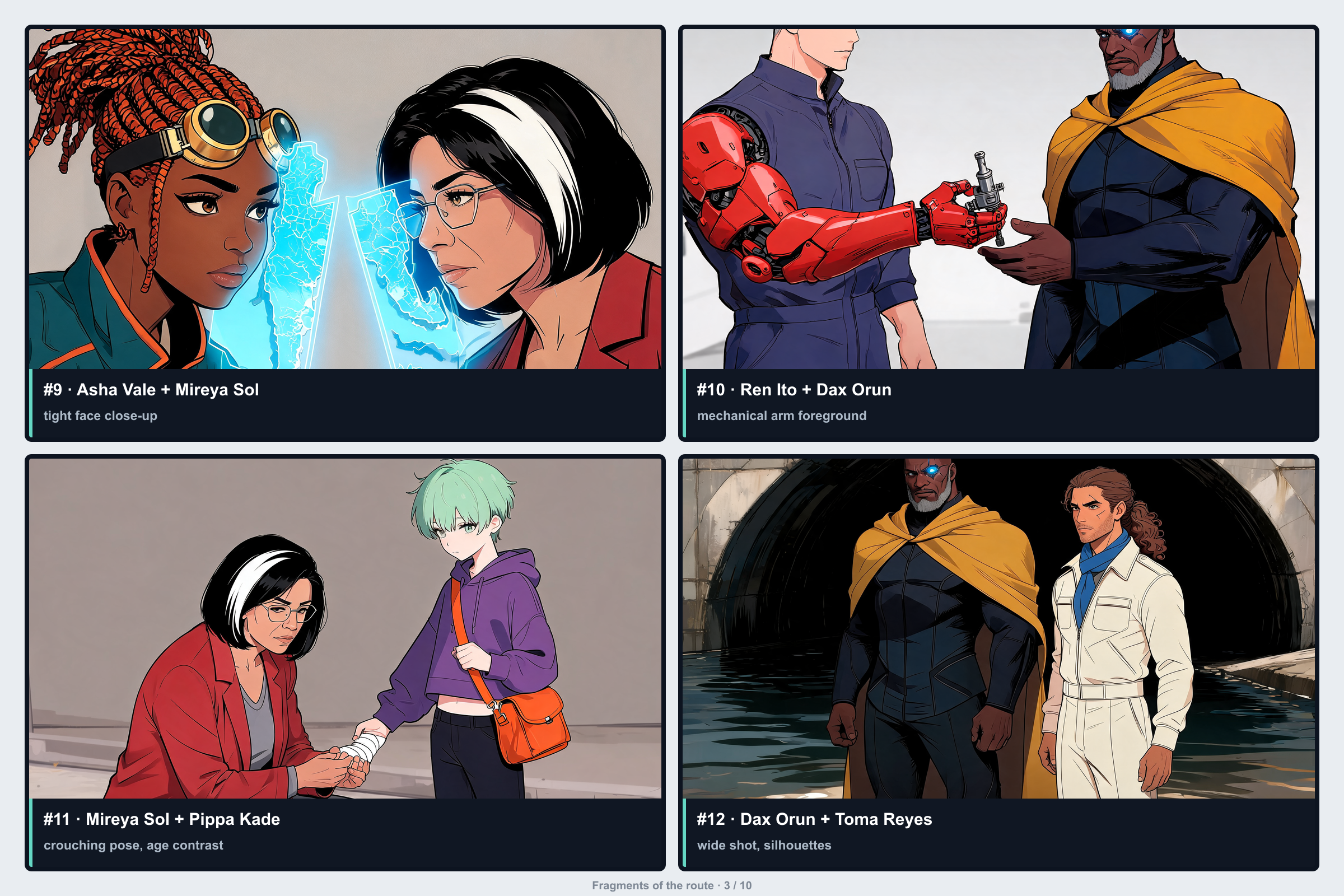
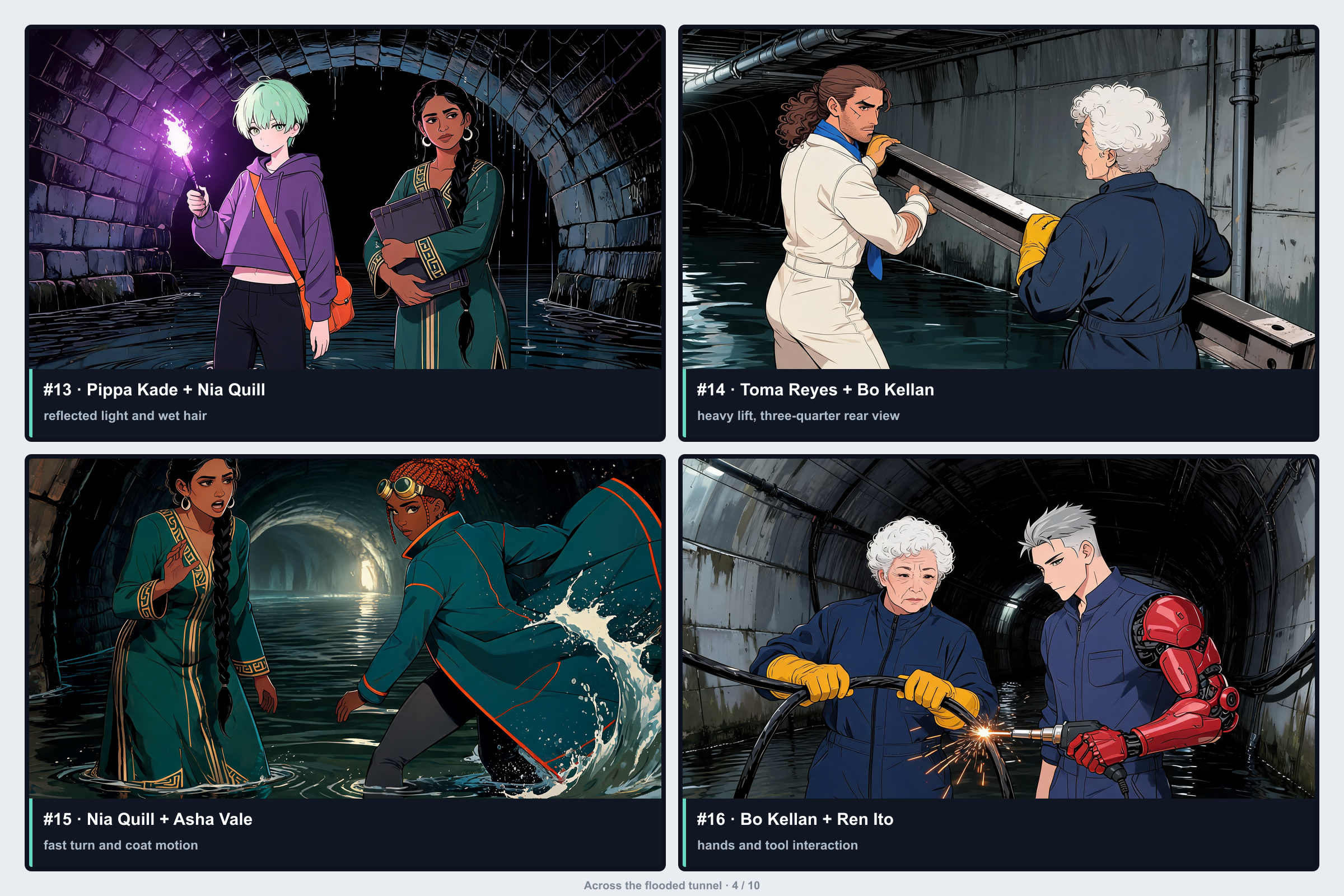
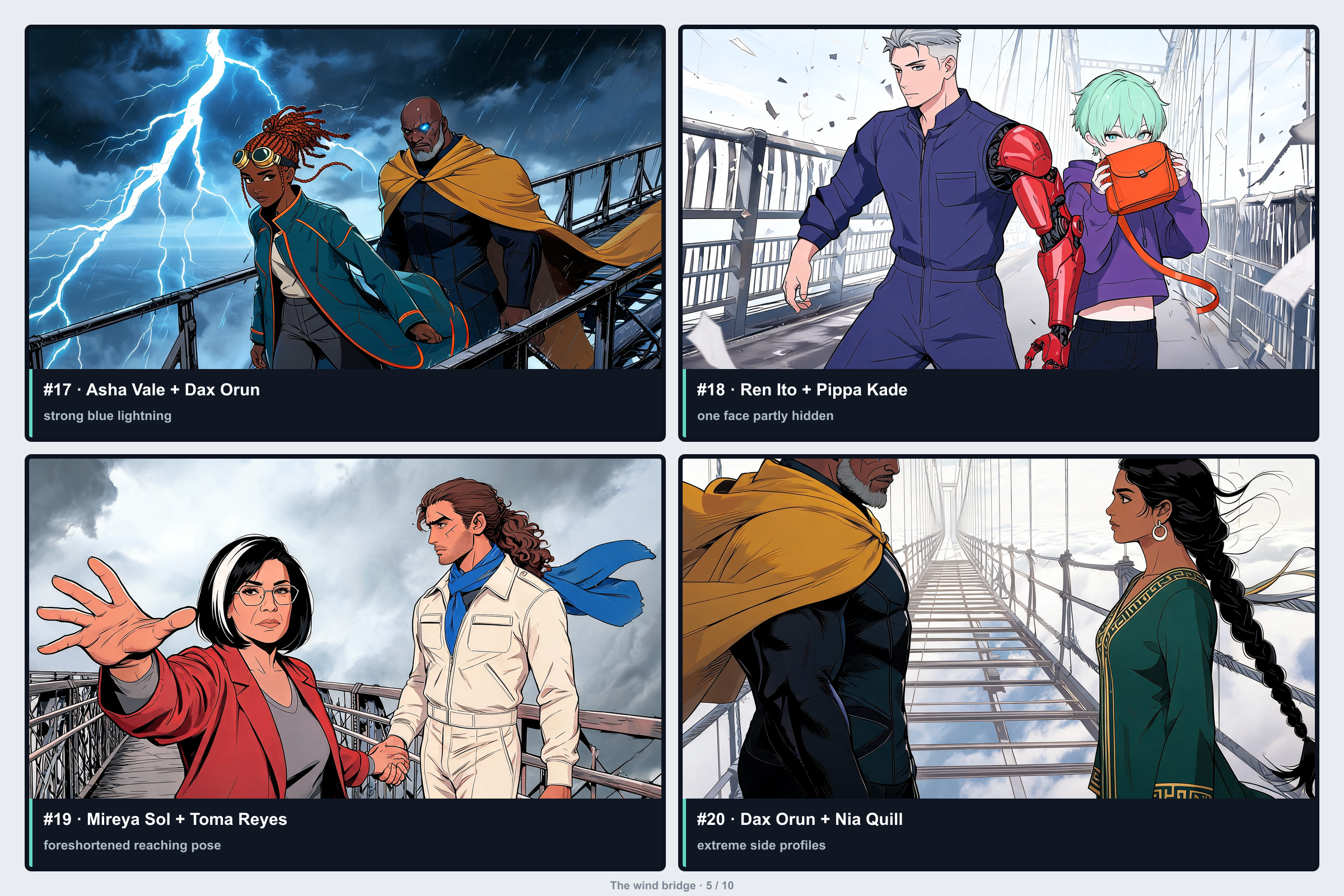
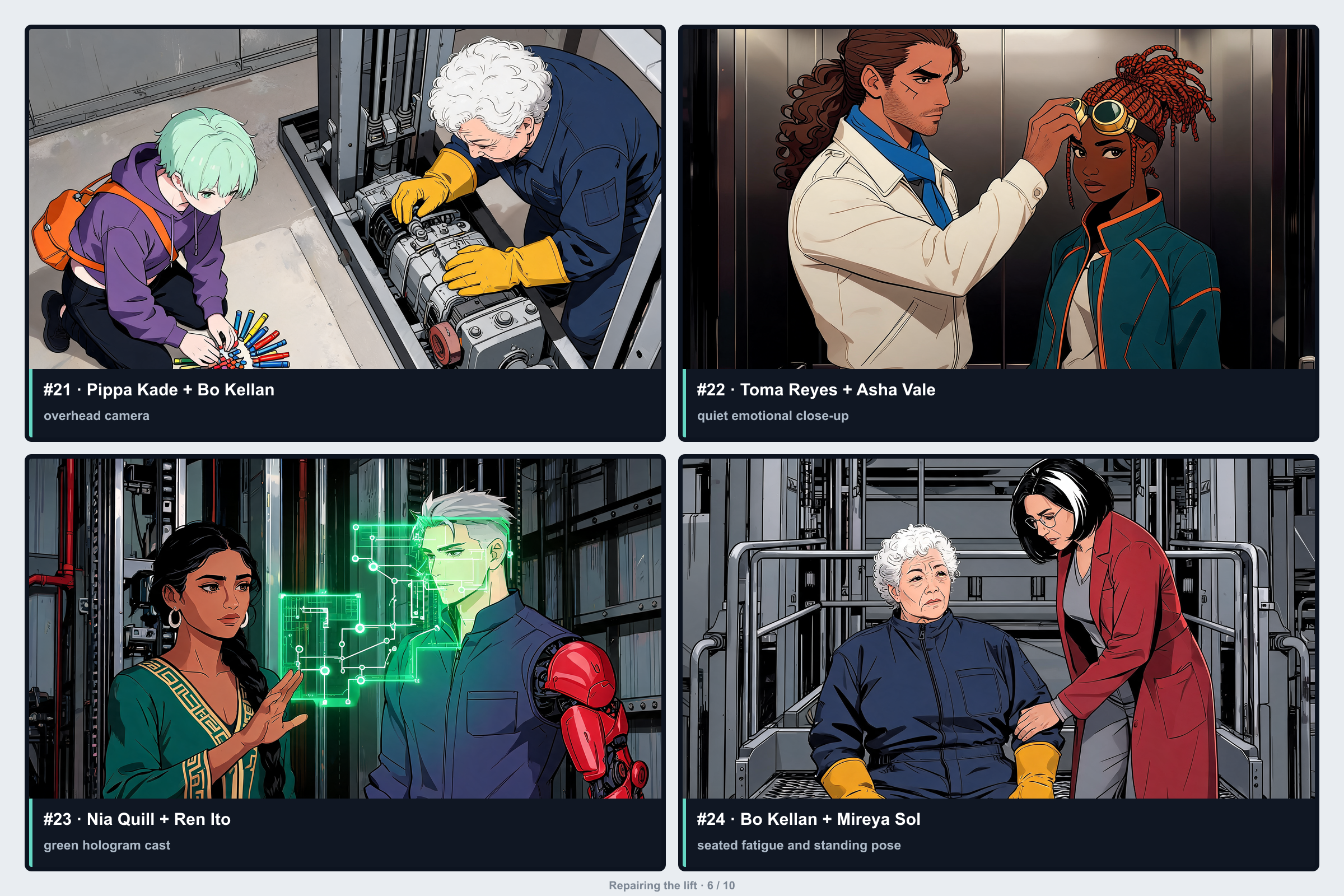
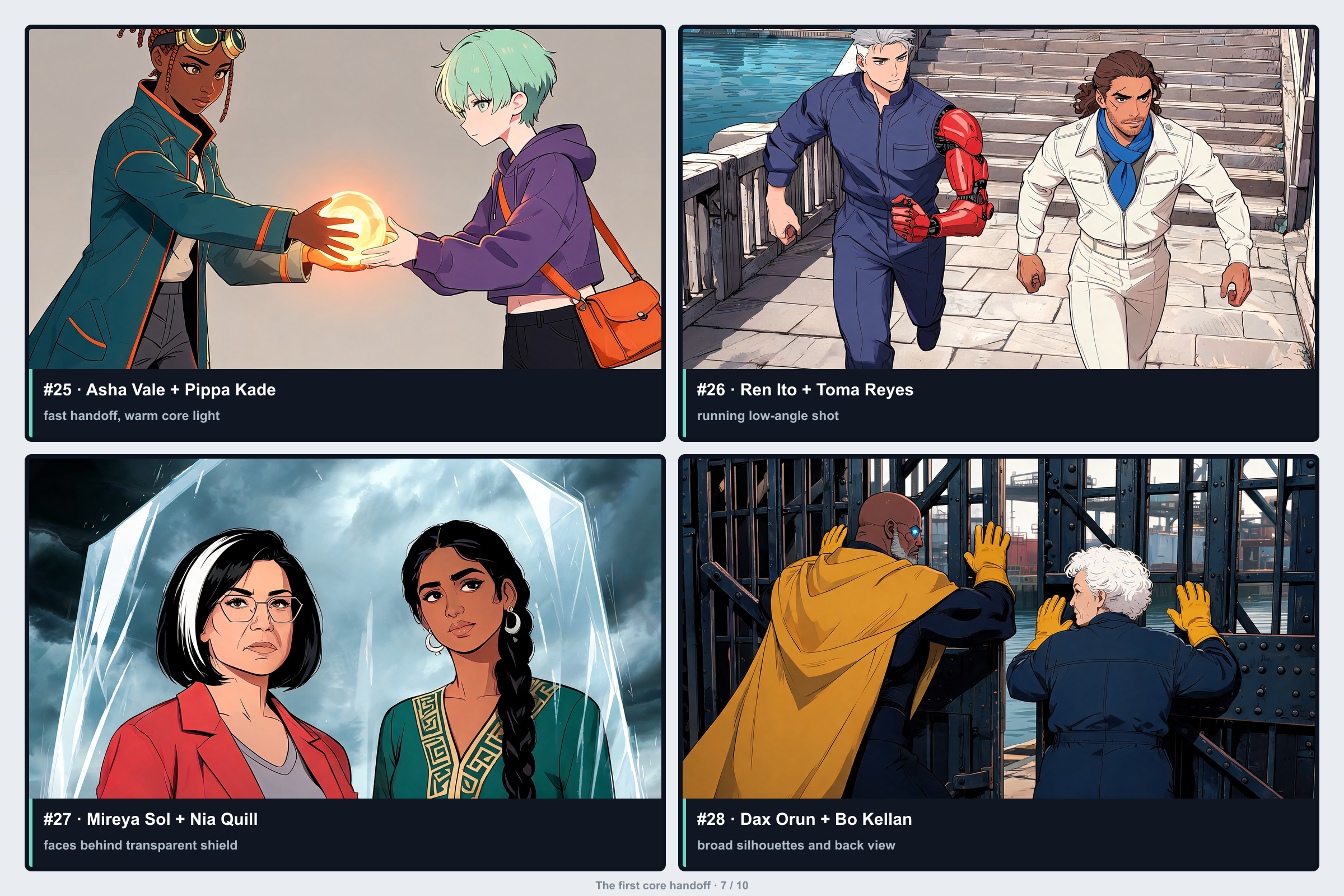
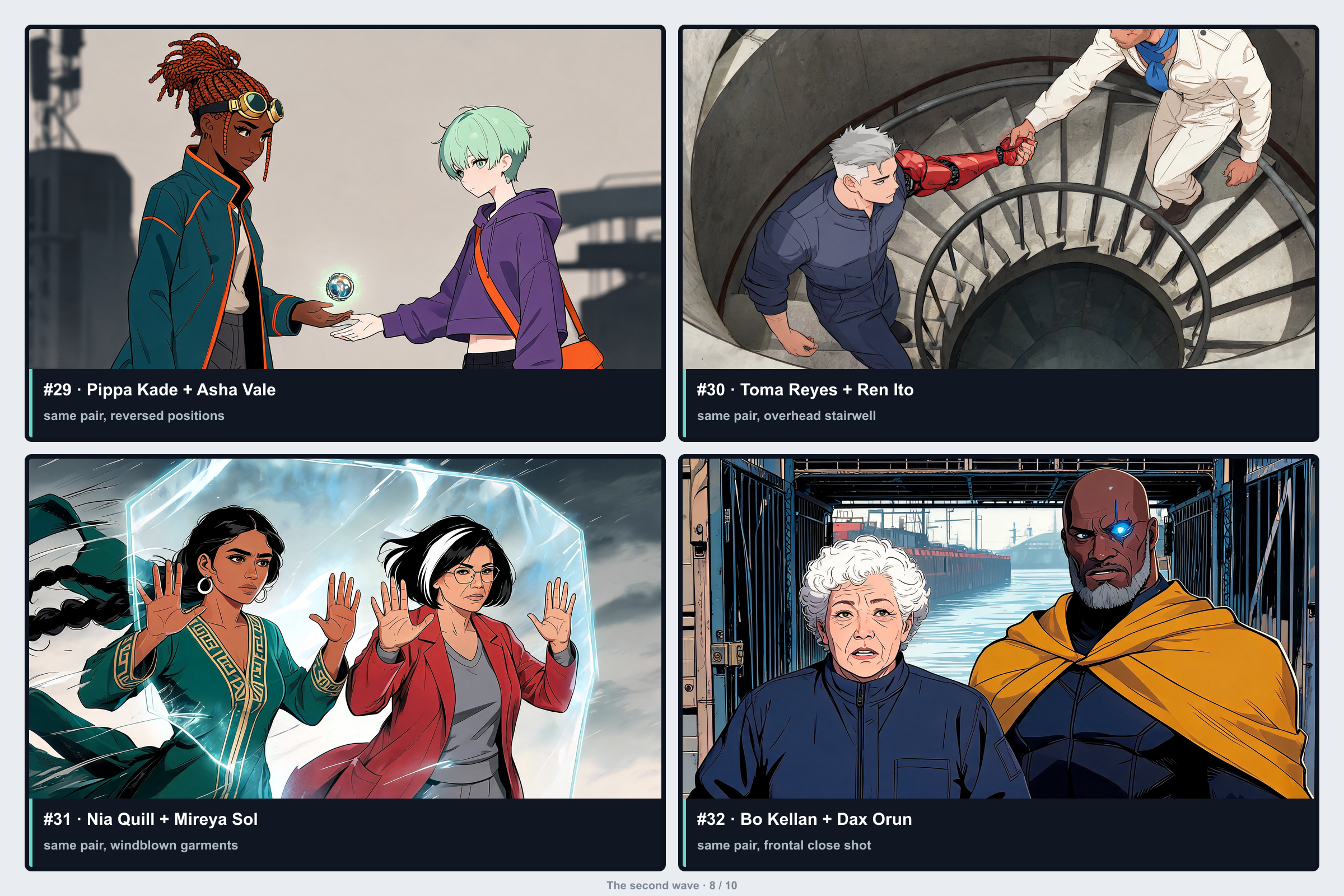
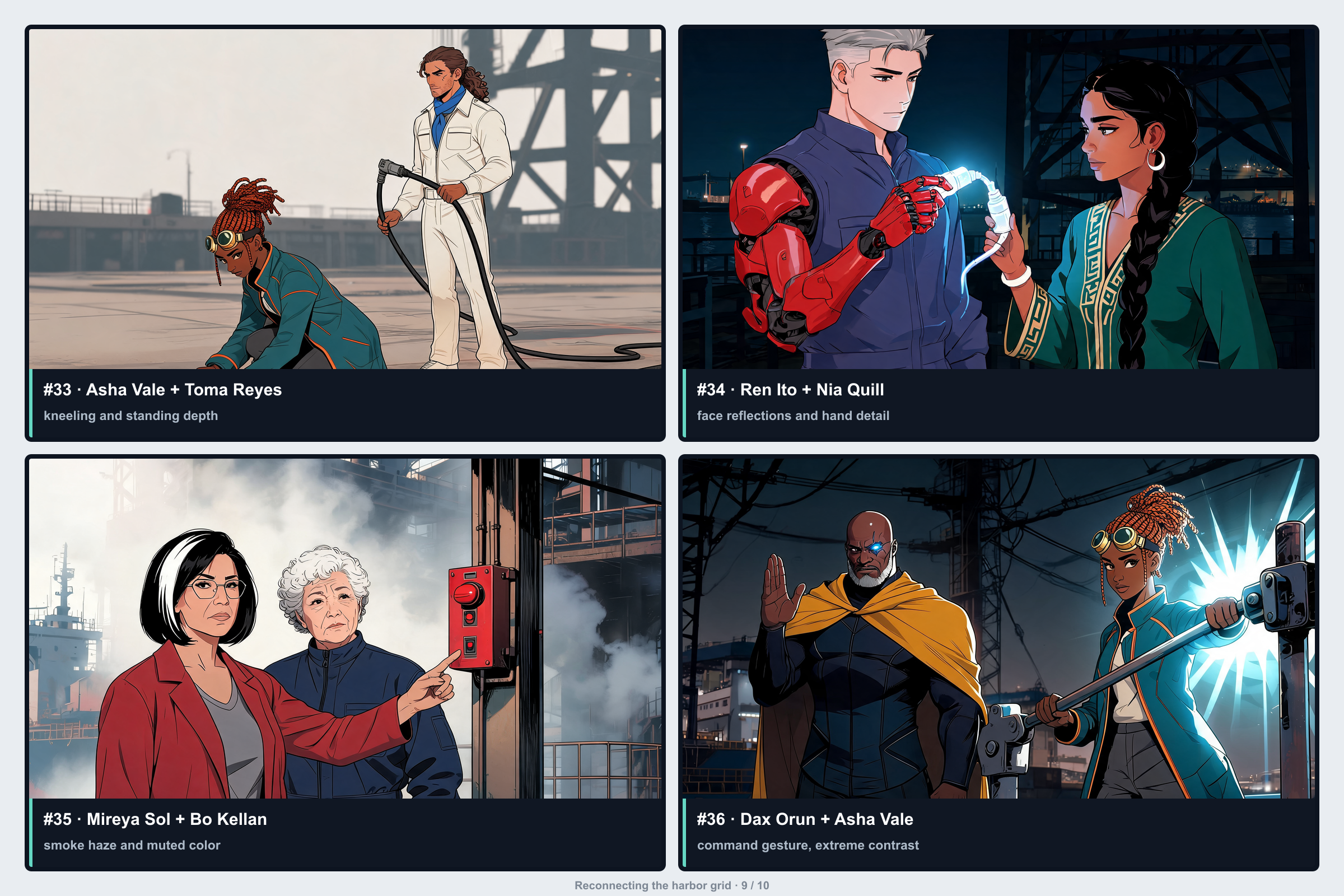
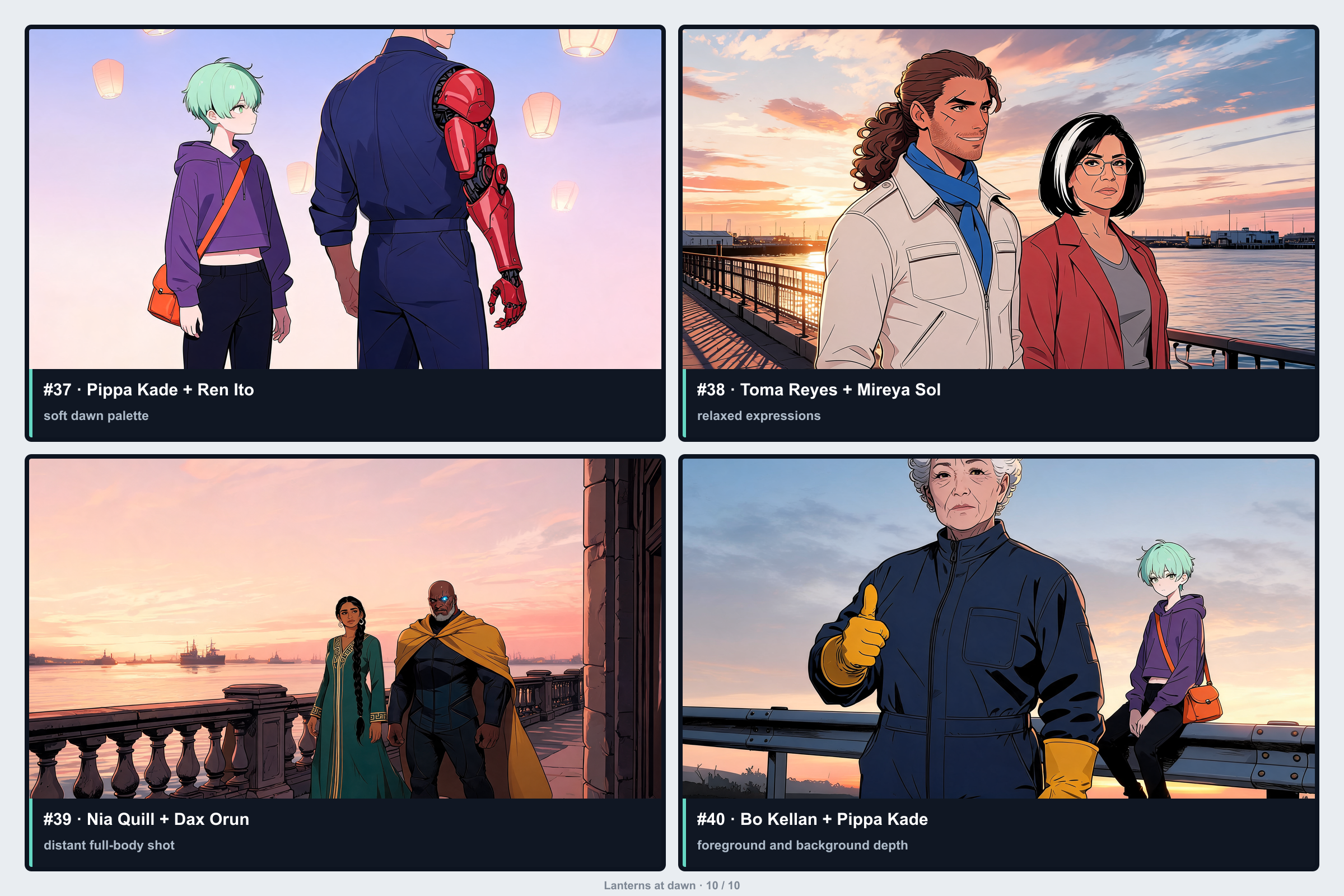
We generated one original 10-page comic with eight registered characters, published all 40 panels and scored all 80 actual character appearances. The first delivery passed 37 panels; three visible failures were repaired and preserved for comparison.
Registered cast
8
Each character appears exactly 10 times
Final panels
40
Published across 10 original pages
Scored appearances
80
Every real cast appearance reviewed
First delivery
37/40
92.5% of panels accepted
Targeted redraws
3
All failed originals remain visible
Final delivery
40/40
All 80 appearances accepted
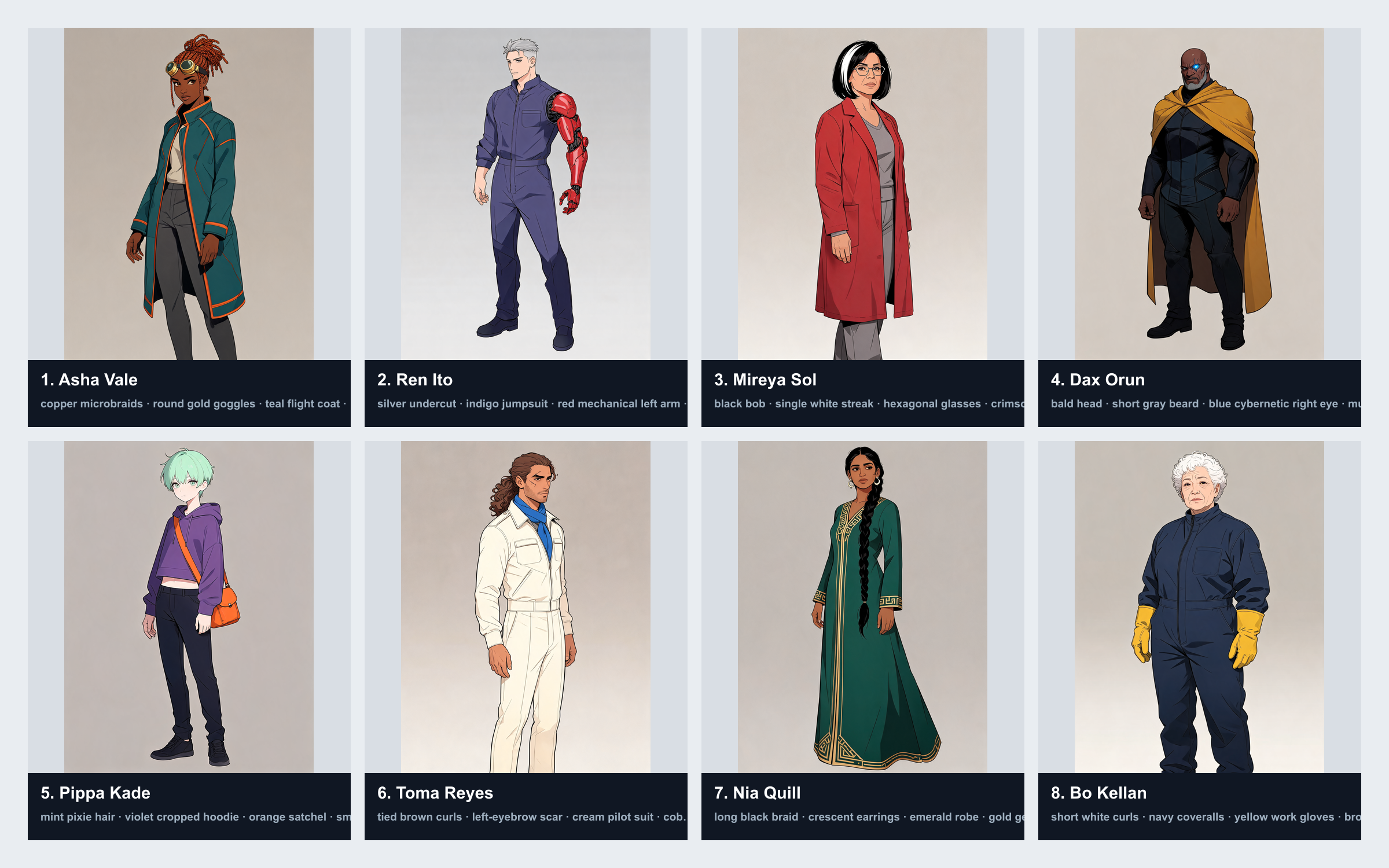
Approved identity anchors
Each character has a distinct face, hair, silhouette, outfit, palette and unique anchor. Every panel received only the references for its named cast, avoiding an overloaded eight-image prompt.
Asha Vale
10 appearancescopper microbraids · round gold goggles · teal flight coat · orange piping
Ren Ito
10 appearancessilver undercut · indigo jumpsuit · red mechanical left arm · angular face
Mireya Sol
10 appearancesblack bob · single white streak · hexagonal glasses · crimson medic coat
Dax Orun
10 appearancesbald head · short gray beard · blue cybernetic right eye · mustard mantle
Pippa Kade
10 appearancesmint pixie hair · violet cropped hoodie · orange satchel · small wiry build
Toma Reyes
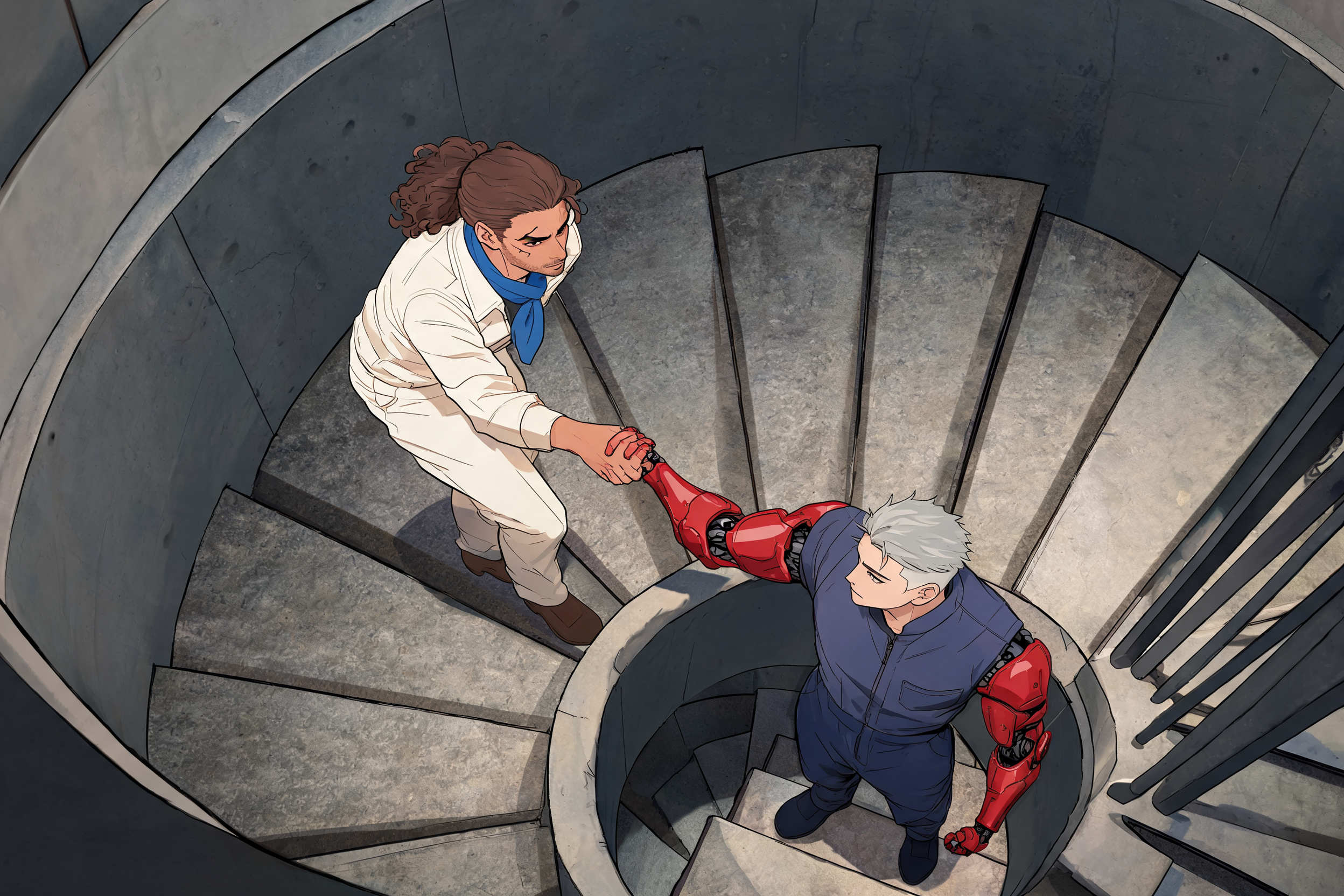
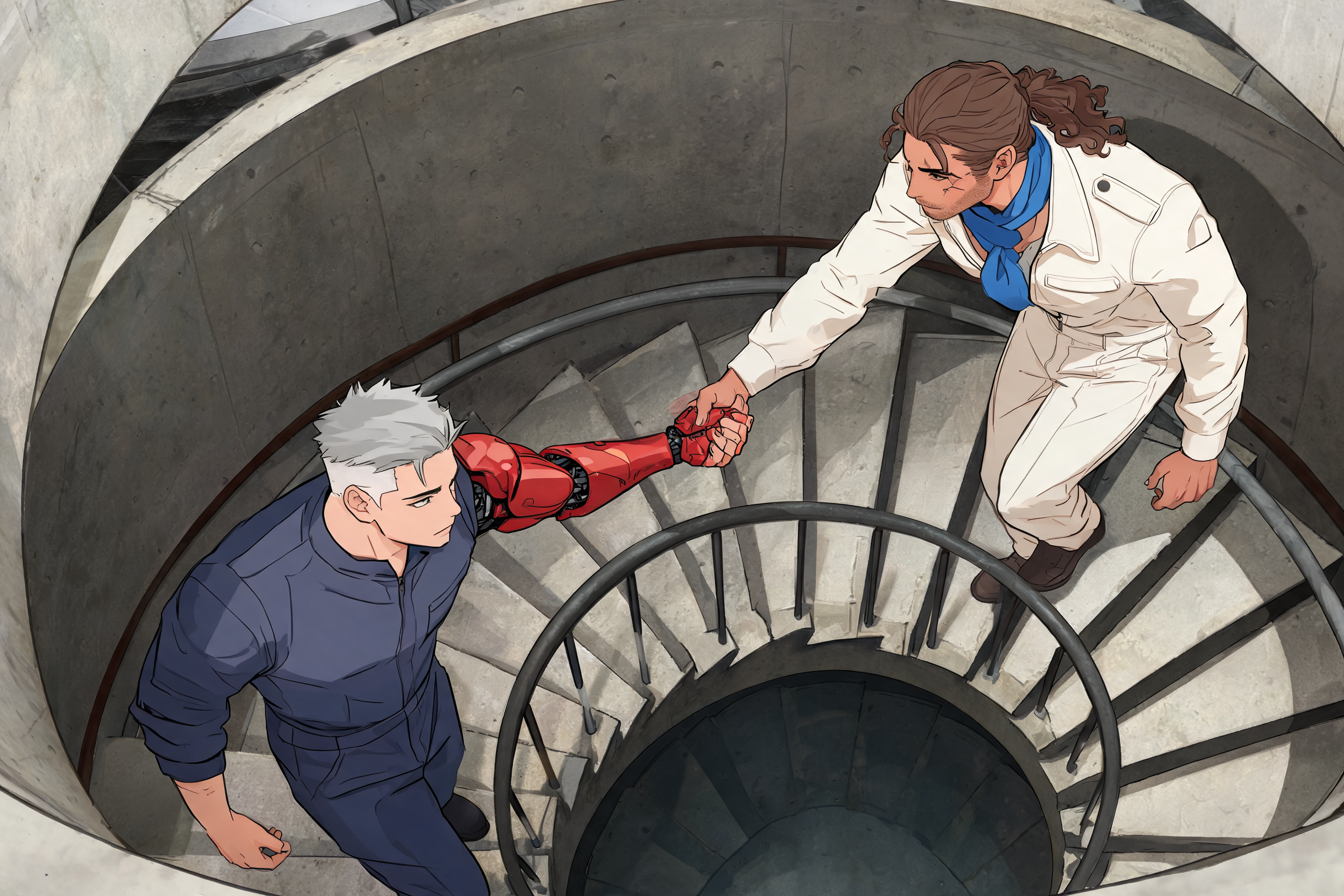
10 appearancestied brown curls · left-eyebrow scar · cream pilot suit · cobalt scarf
Nia Quill
10 appearanceslong black braid · crescent earrings · emerald robe · gold geometric trim
Bo Kellan
10 appearancesshort white curls · navy coveralls · yellow work gloves · broad shoulders
Complete result, not a highlight reel
The full contact sheet and every 2400 × 1600 page are served from immutable CDN originals. Panel labels disclose the cast and visual challenge for each test.
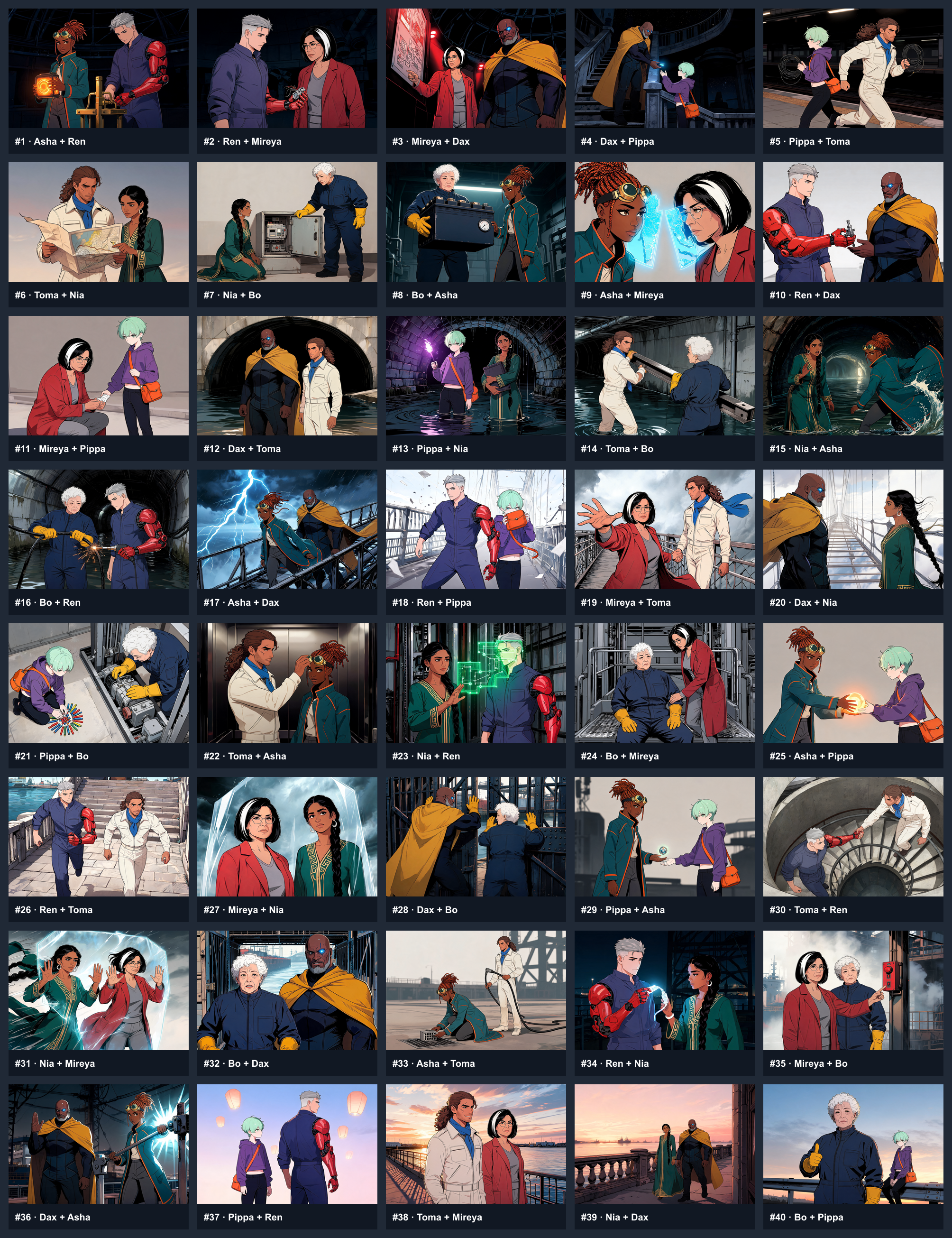
Expand the reader to load the original 2400 × 1600 PNG pages without optimiser recompression.
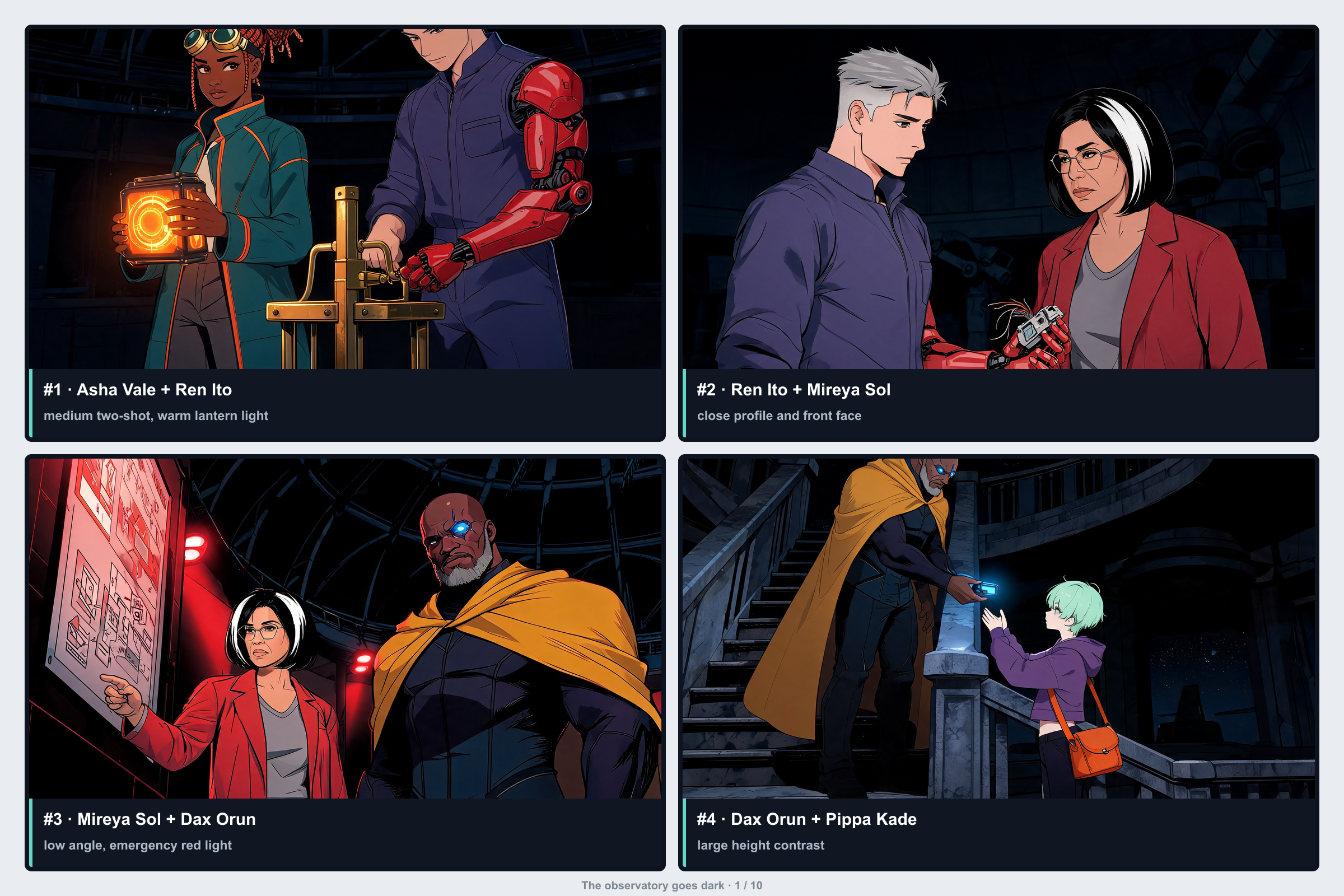
Identity failures disclosed
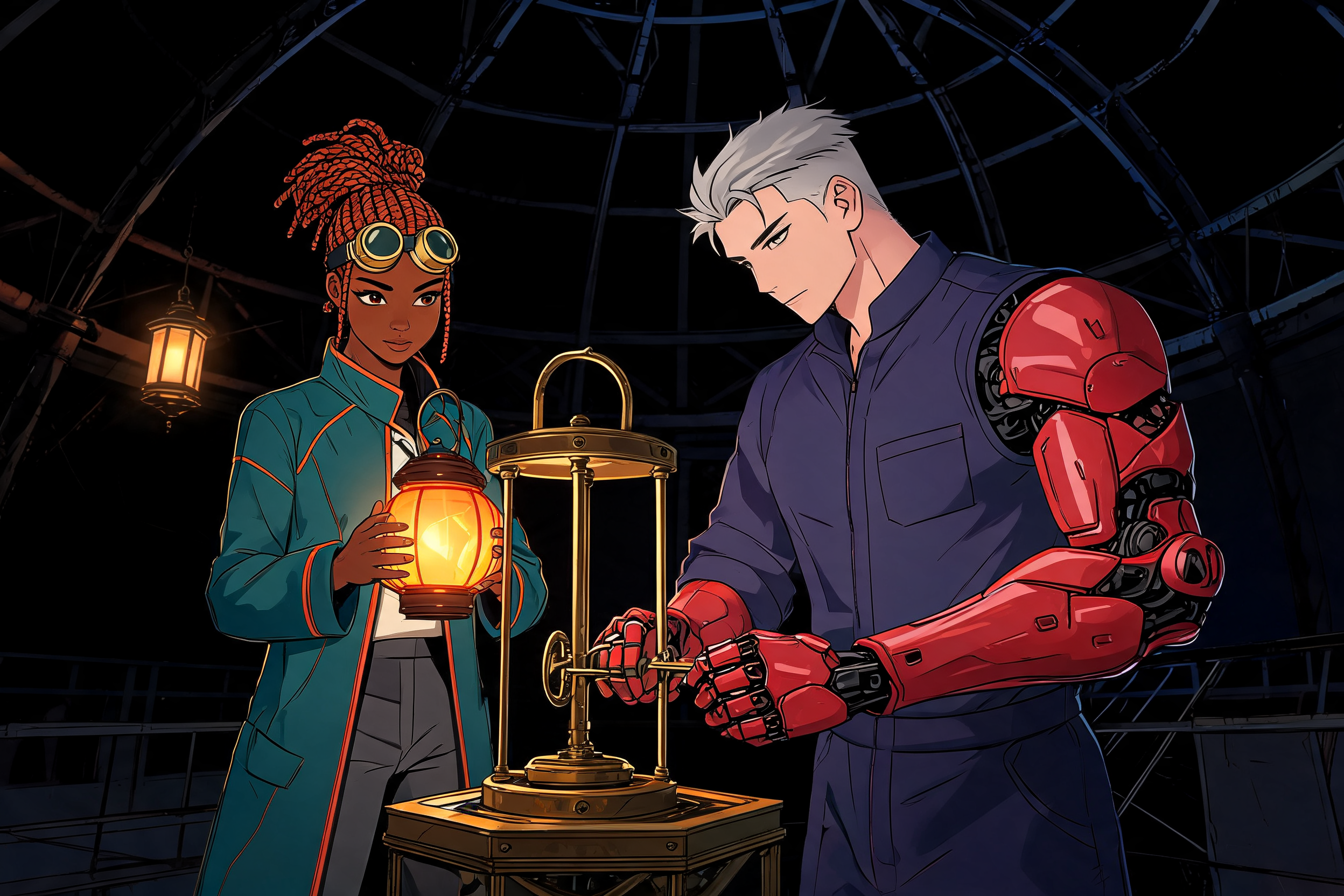
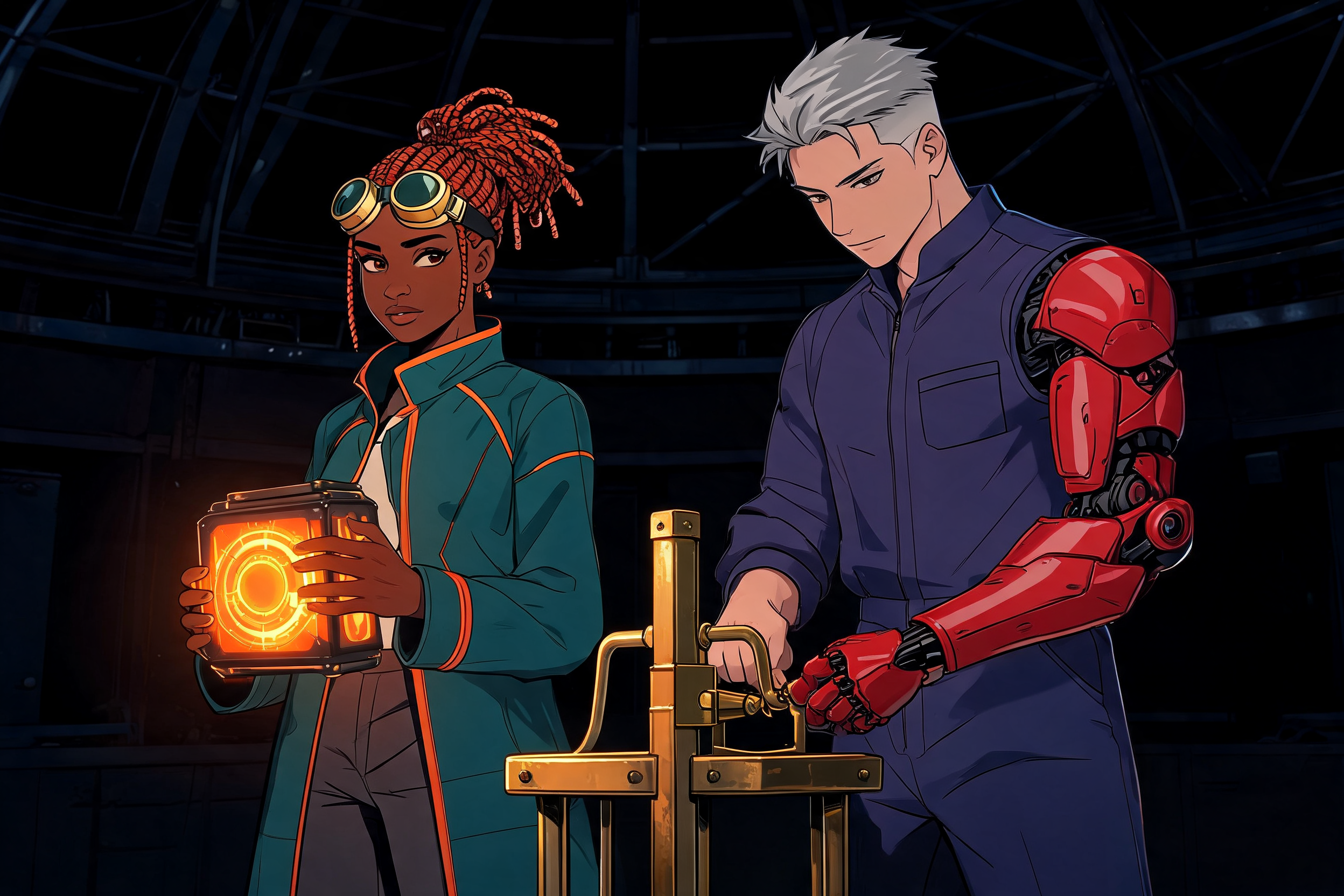
Three panels failed because Ren Ito's single mechanical left arm was duplicated. Each first-delivery image is preserved beside its one-redraw result; no failed panel was silently removed from the score.
Panel 1Asha Vale + Ren Ito
Ren Ito's single red mechanical left arm was rendered with duplicate robotic hand or forearm anatomy.
Panel 10Ren Ito + Nia Quill
Ren Ito's single red mechanical left arm was rendered with duplicate robotic hand or forearm anatomy.
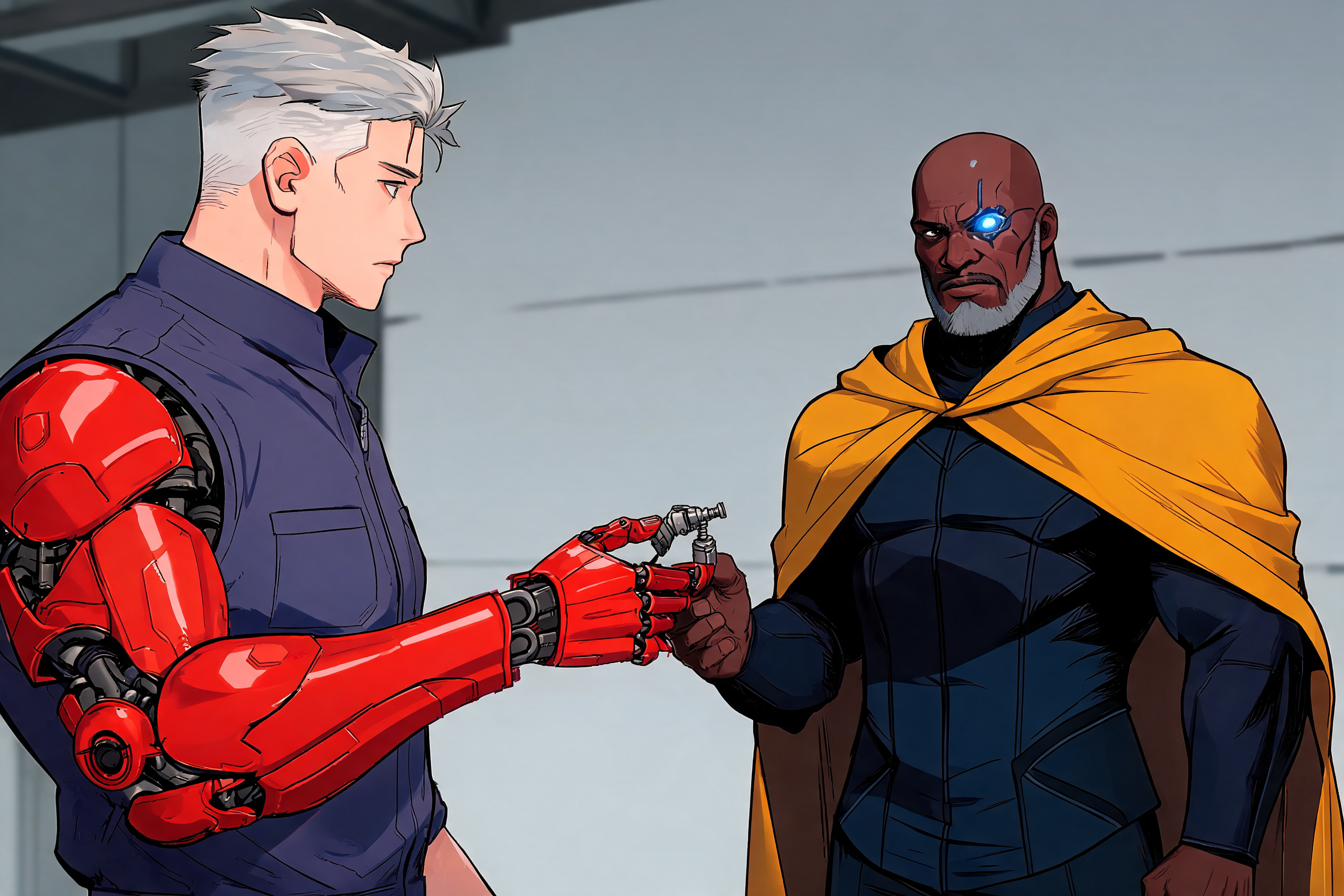
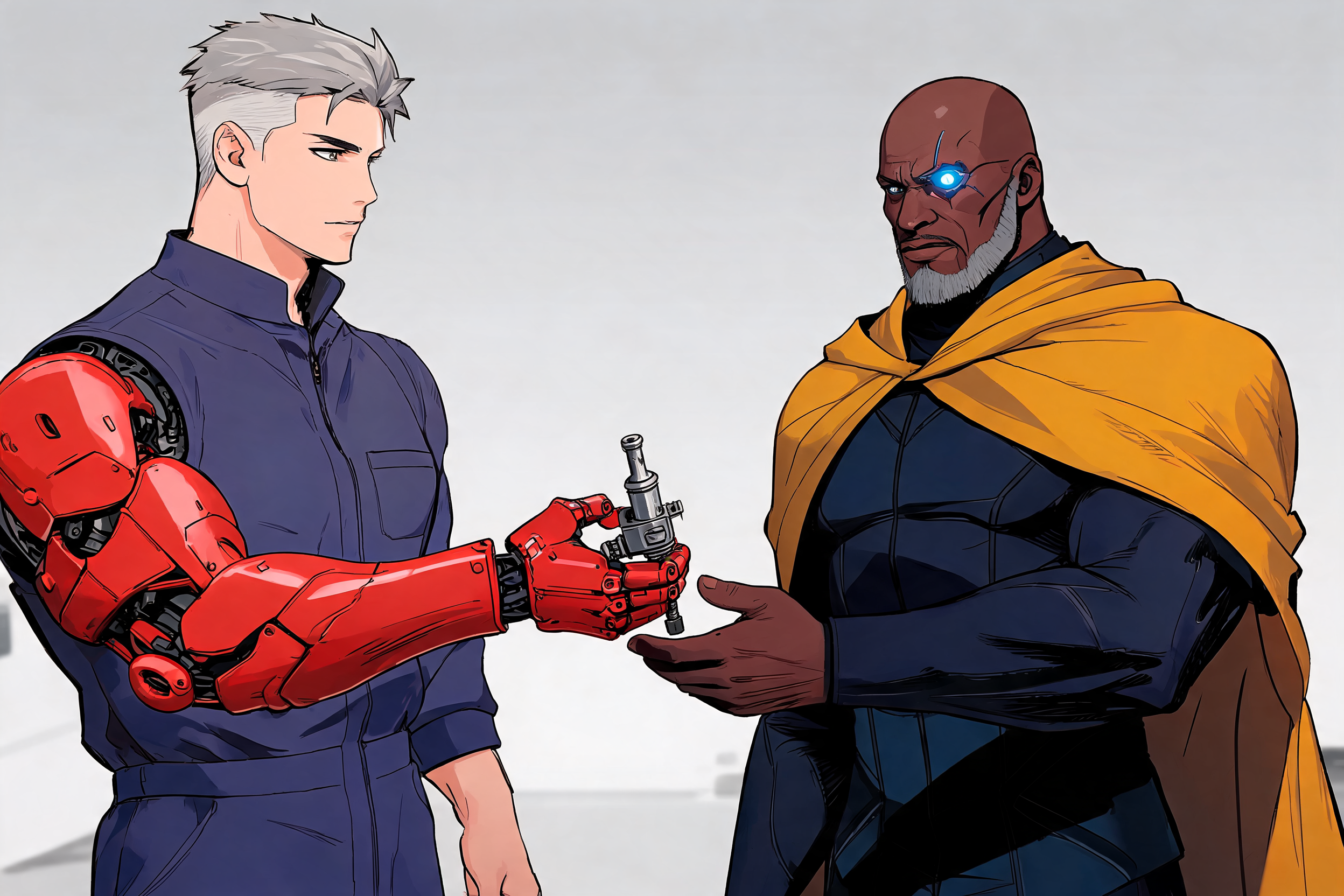
Panel 30Ren Ito + Toma Reyes
Ren Ito's single red mechanical left arm was rendered with duplicate robotic hand or forearm anatomy.
Active human review time was not instrumented separately. Local analytics persistence was unavailable, so the exact settled provider cost is not reported; the run used 51 successful image calls with zero provider failures.
Approved evidence SHA-256: 98c7d95e7fe7663b99d3ae8f482ad6583c281c7a8a836d68d40e8c819ab1d636
Comic, webtoon, storyboard and video creators need repeatable characters, not isolated portraits.
Face, hair, costume and silhouette need to remain recognisable.
The same character must work in close-ups, full-body poses and action scenes.
A consistent character becomes a reusable asset across a story pipeline.
Identity
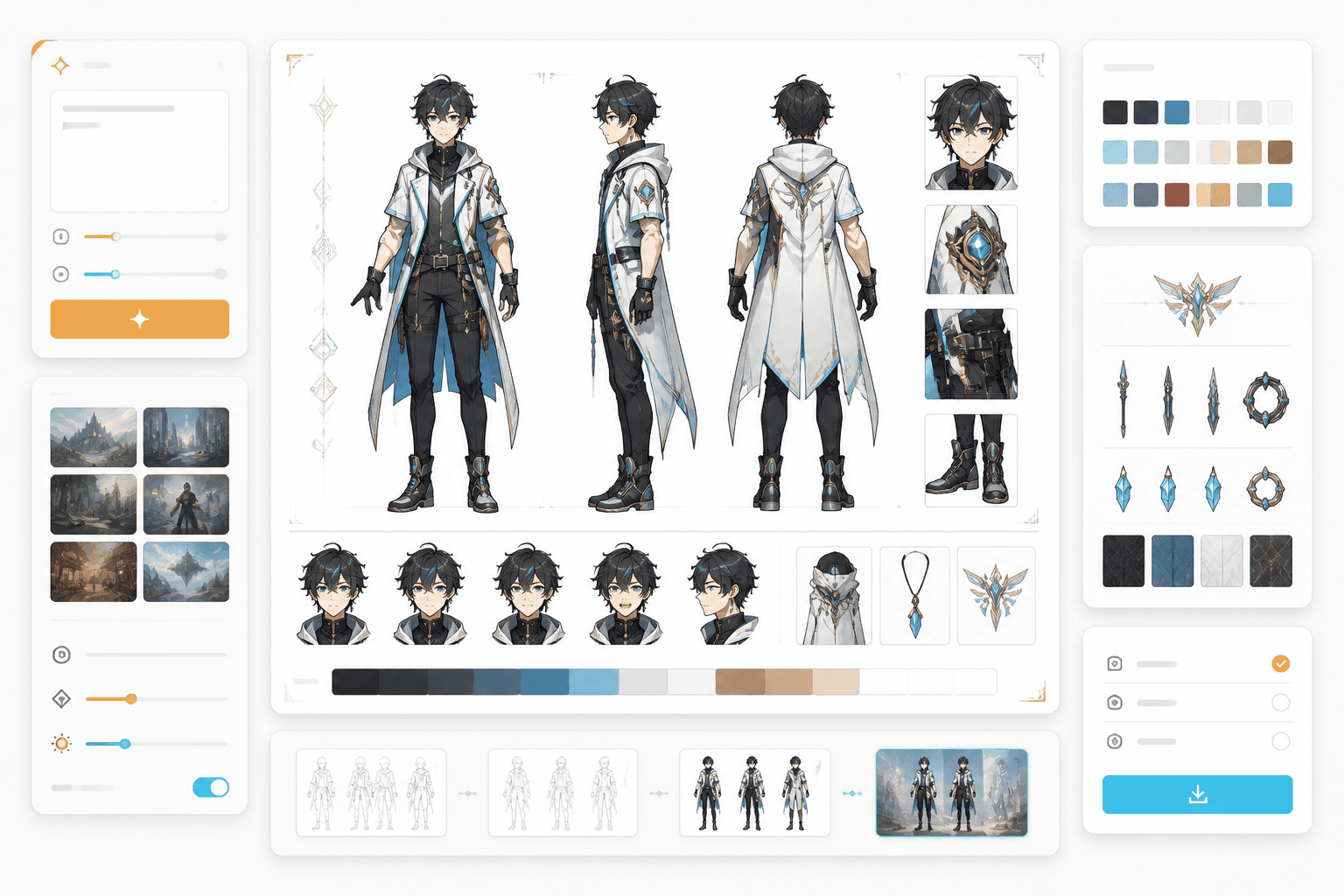
Create a reusable character identity that can survive pose changes, expression changes and scene changes.
Sheets
Use character sheets when you need front, side, back, expressions and outfit details for production.
Workflow guide
One-off images are easy; recurring story characters need recognisable faces, outfits and visual continuity.
Set face, hair, outfit, colour palette and personality.
Create poses, emotions and scene-ready views while preserving identity.
Apply the character to comics, webtoons, storyboards and video scenes.
Anchor identity first, then request variations.
Related writing workflow
Use the AI Screenplay Editor when a script, fiction draft, storyboard brief, video idea, or canvas note needs proper scene headings, action, dialogue, parentheticals, cover pages, outlines, beats, and collaboration-ready revisions.
INT. COMMUNITY CENTER - NIGHT
Folded chairs. A storm outside. MAYA stands at the microphone with a page of notes she no longer needs.
MAYA
If the city will not read the record, we will read it out loud.
Generate a reusable character identity and carry it into panels, storyboards, webtoons and videos.