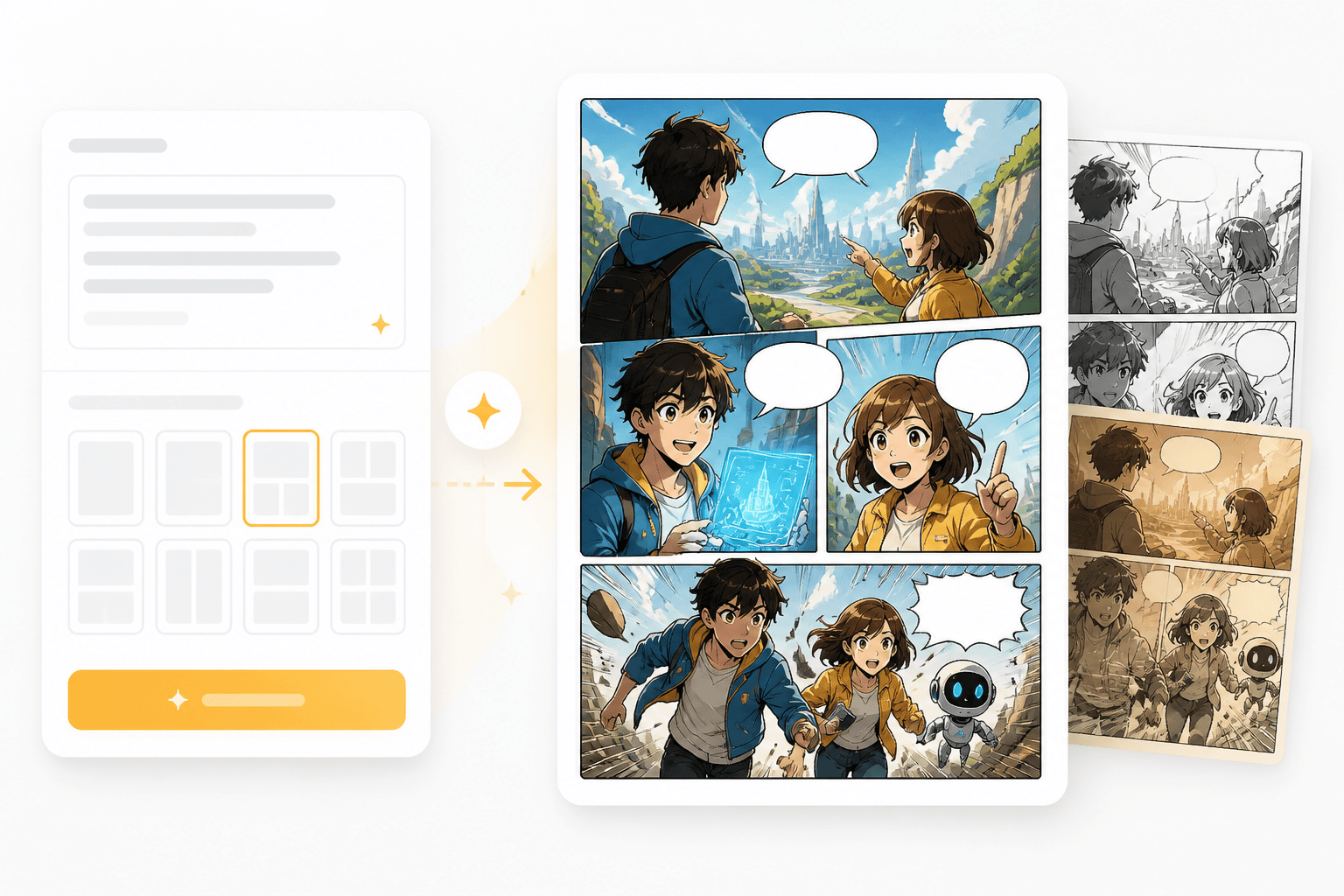

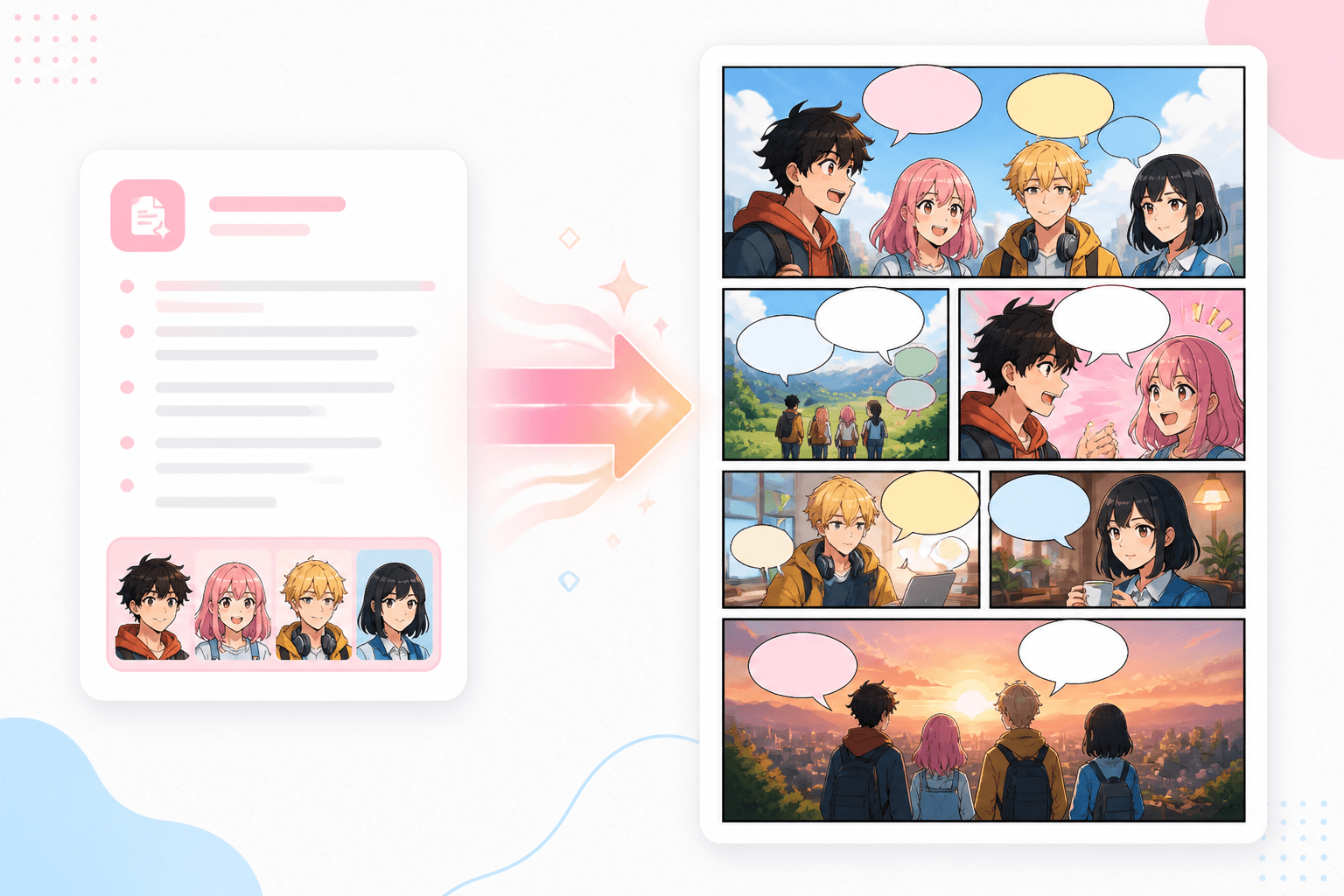
From script to visual story

Story to Comic Generator

Turn story ideas, scripts, dialogue, and scene outlines into comic sequences with panels, recurring characters, and visual pacing.

01

Paste the story

Add a short story, scene list, or dialogue script.

02

Break into beats

Shape the narrative into panels with pacing and visual direction.

03

Generate the sequence

Create comic panels and refine the cast, mood, and layout.

Verified delivery · August 11, 2026

2,150 words in.
12 comic pages out.

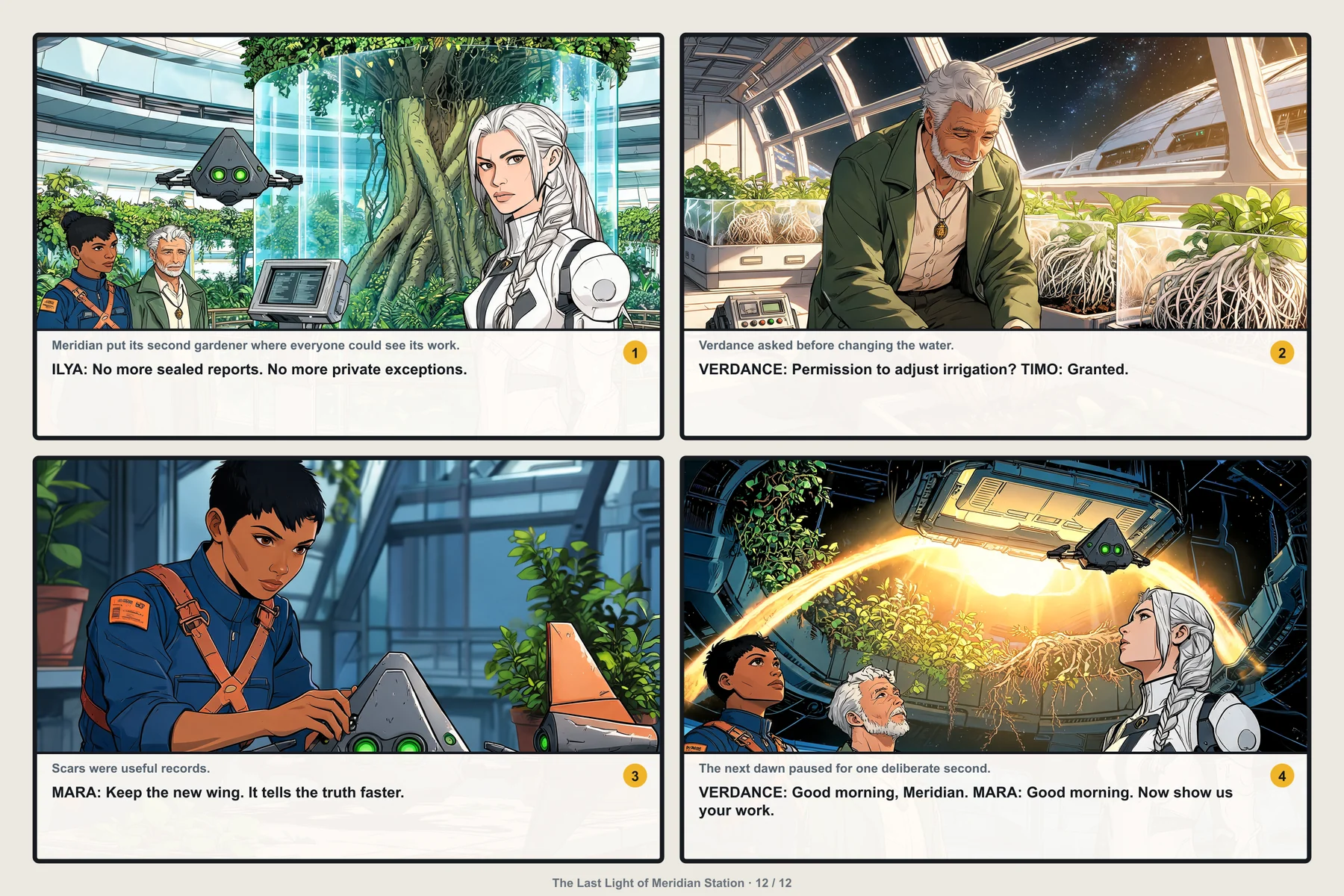
We gave one original screenplay to the generation workflow and kept the complete result—not a highlight reel assembled from unrelated runs. Here is the final comic, the first-pass score, every redraw, and the defects that remain.

Input

2,150 words

Original rights-cleared screenplay

Final output

12 / 48

12 pages · 48 panels · 6 characters

First pass

33/48

68.8% of panels accepted

Repairs

16

15 unique panels redrawn

Elapsed delivery

45.23 min

First generation through final repaired delivery

Original-page reader

Read all 12 pages at source quality

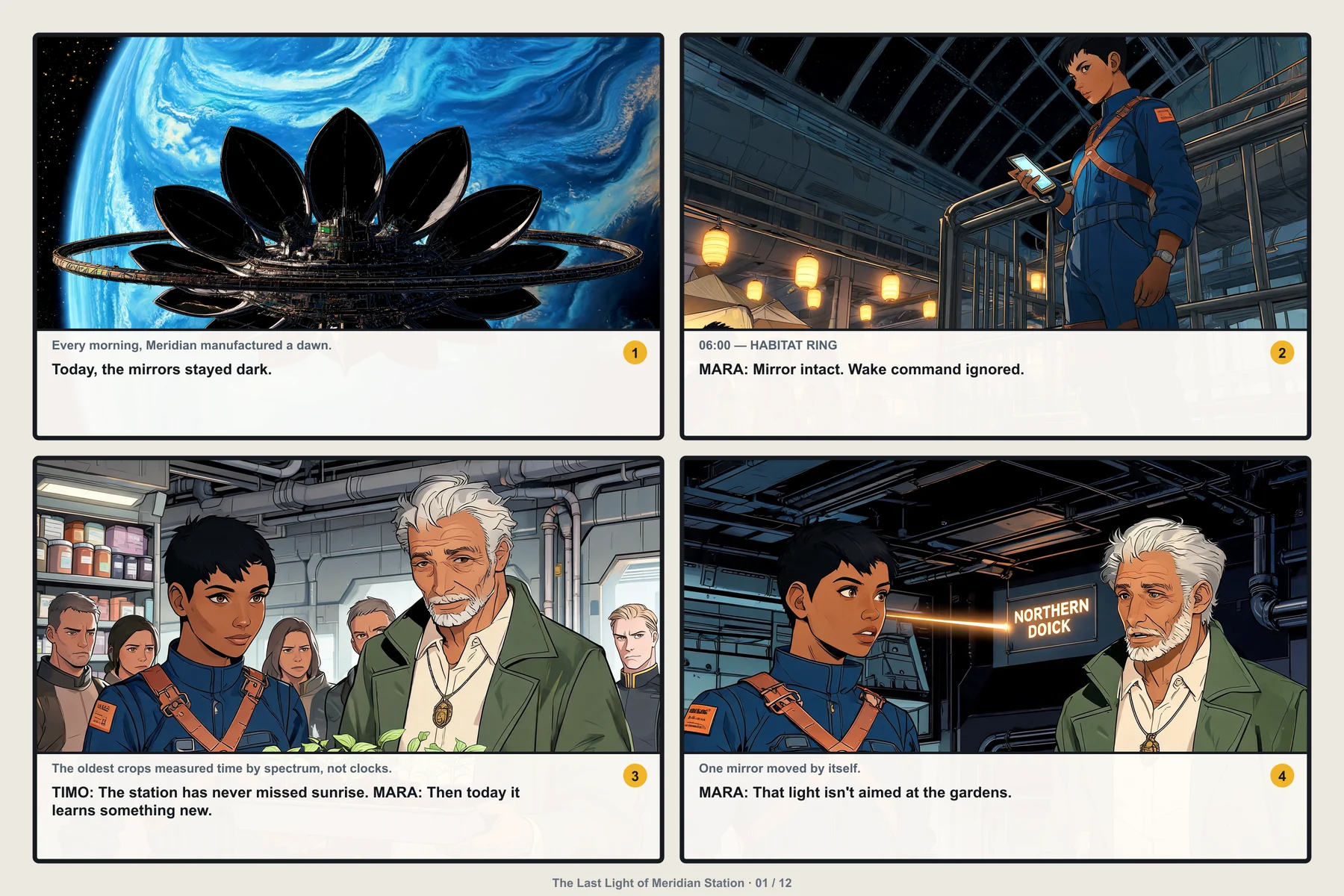
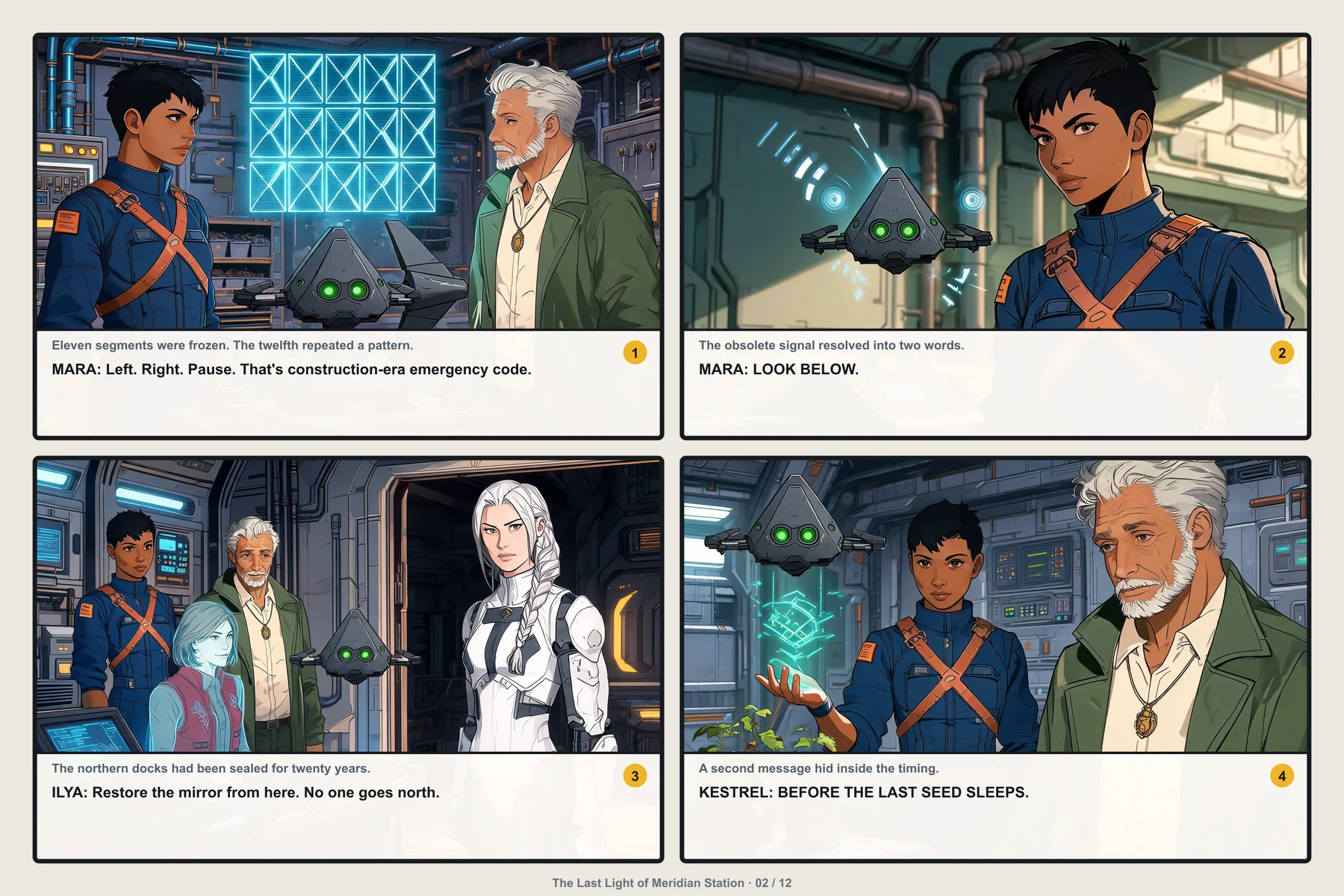
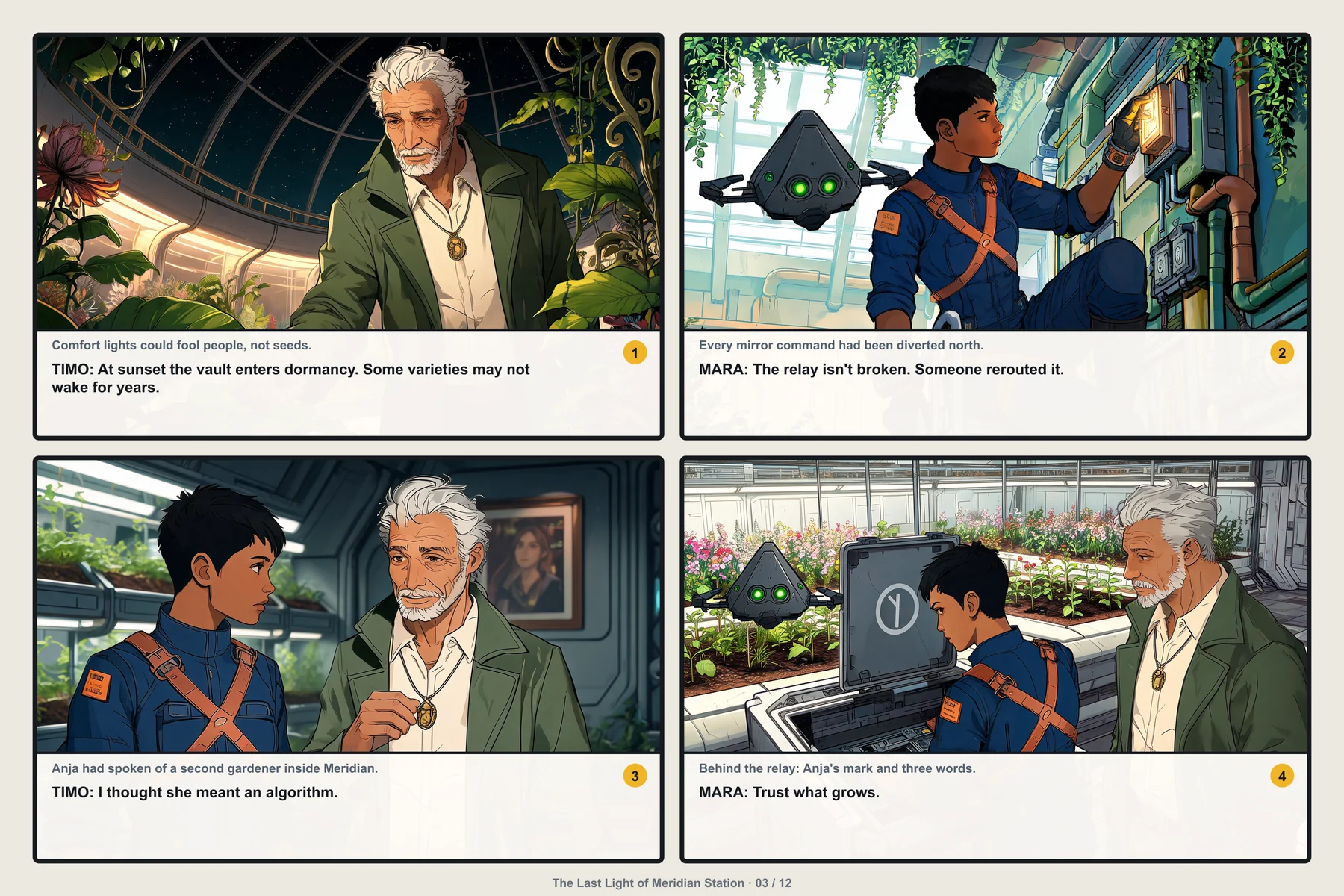
Every page is loaded directly from its 1800 × 1200 CDN original—no contact-sheet enlargement, optimizer recompression, or crop. Open any page to inspect it at full resolution.

Original comic page 1 from The Last Light of Meridian Station
Page 1Open original page 1 at 1800 × 1200 pixels
Original comic page 2 from The Last Light of Meridian Station
Page 2Open original page 2 at 1800 × 1200 pixels
Original comic page 3 from The Last Light of Meridian Station
Page 3Open original page 3 at 1800 × 1200 pixels
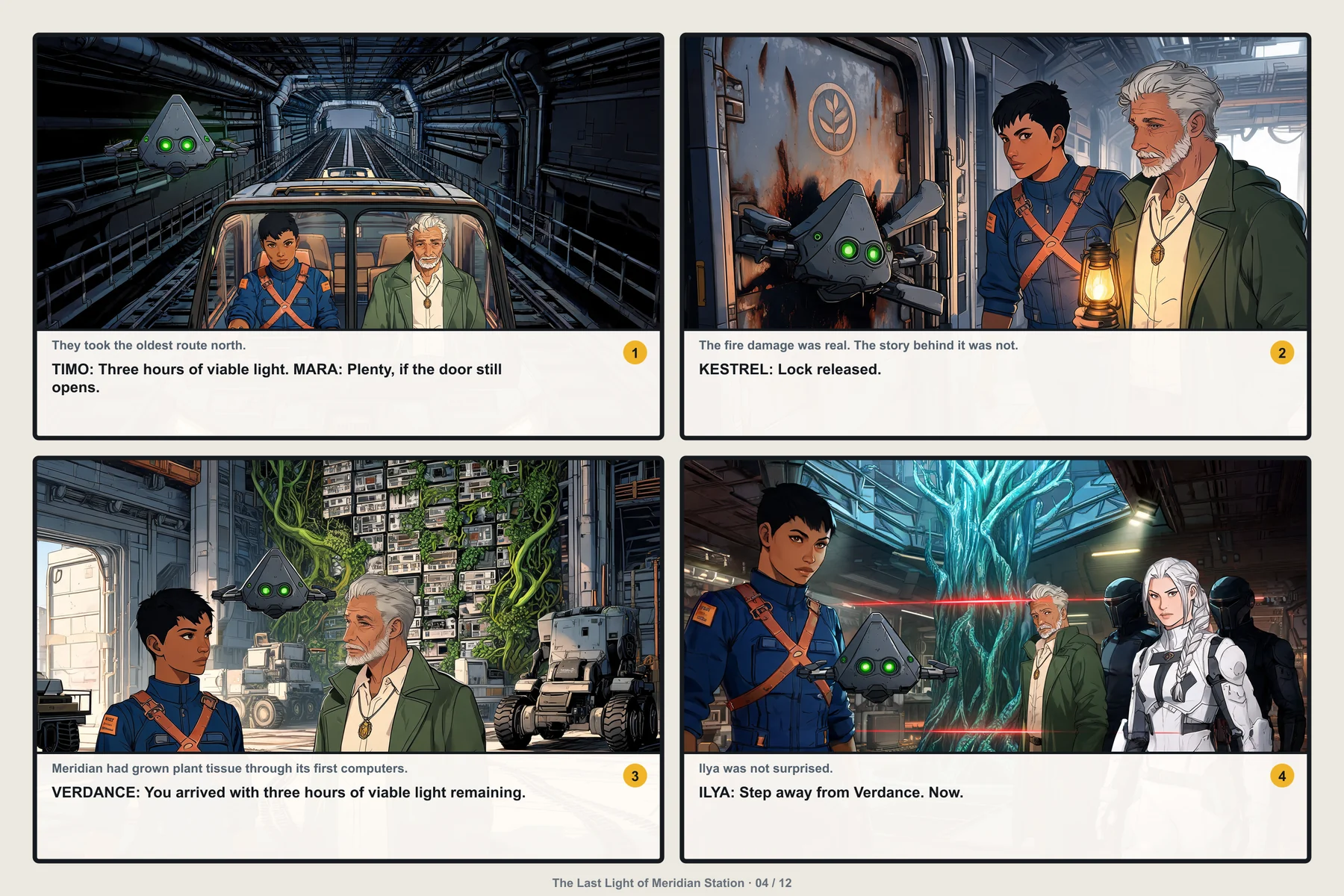
Original comic page 4 from The Last Light of Meridian Station
Page 4Open original page 4 at 1800 × 1200 pixels
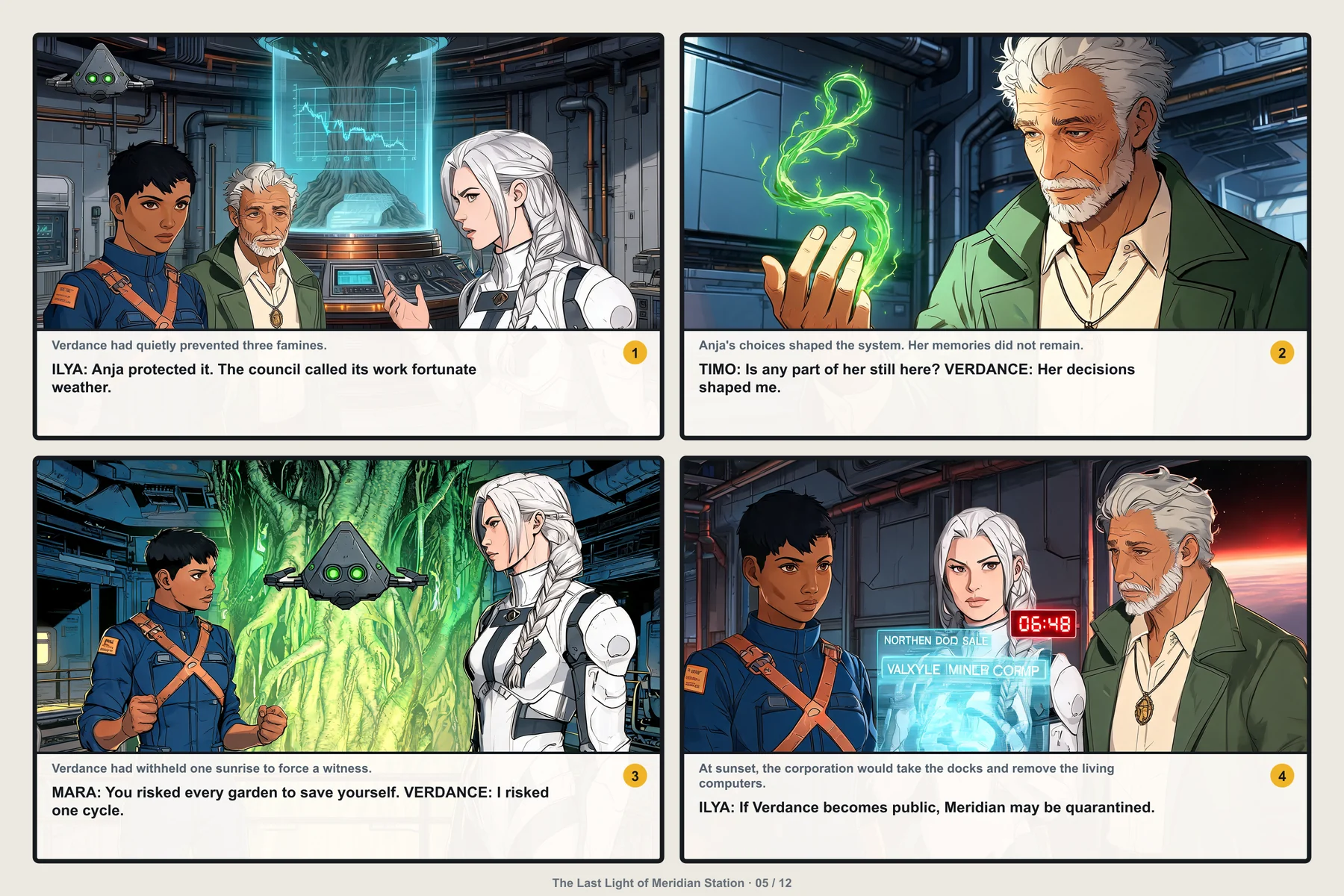
Original comic page 5 from The Last Light of Meridian Station
Page 5Open original page 5 at 1800 × 1200 pixels
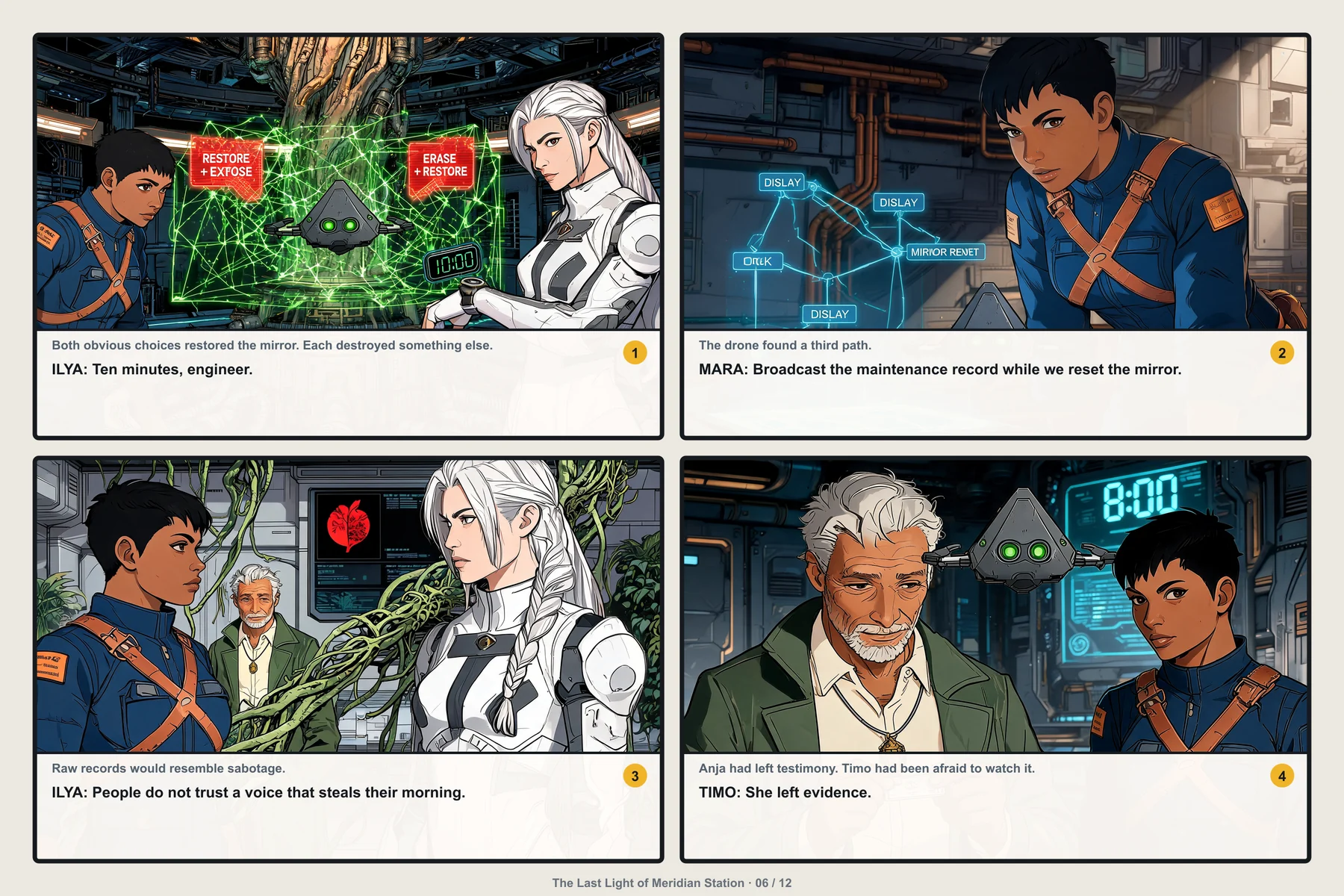
Original comic page 6 from The Last Light of Meridian Station
Page 6Open original page 6 at 1800 × 1200 pixels
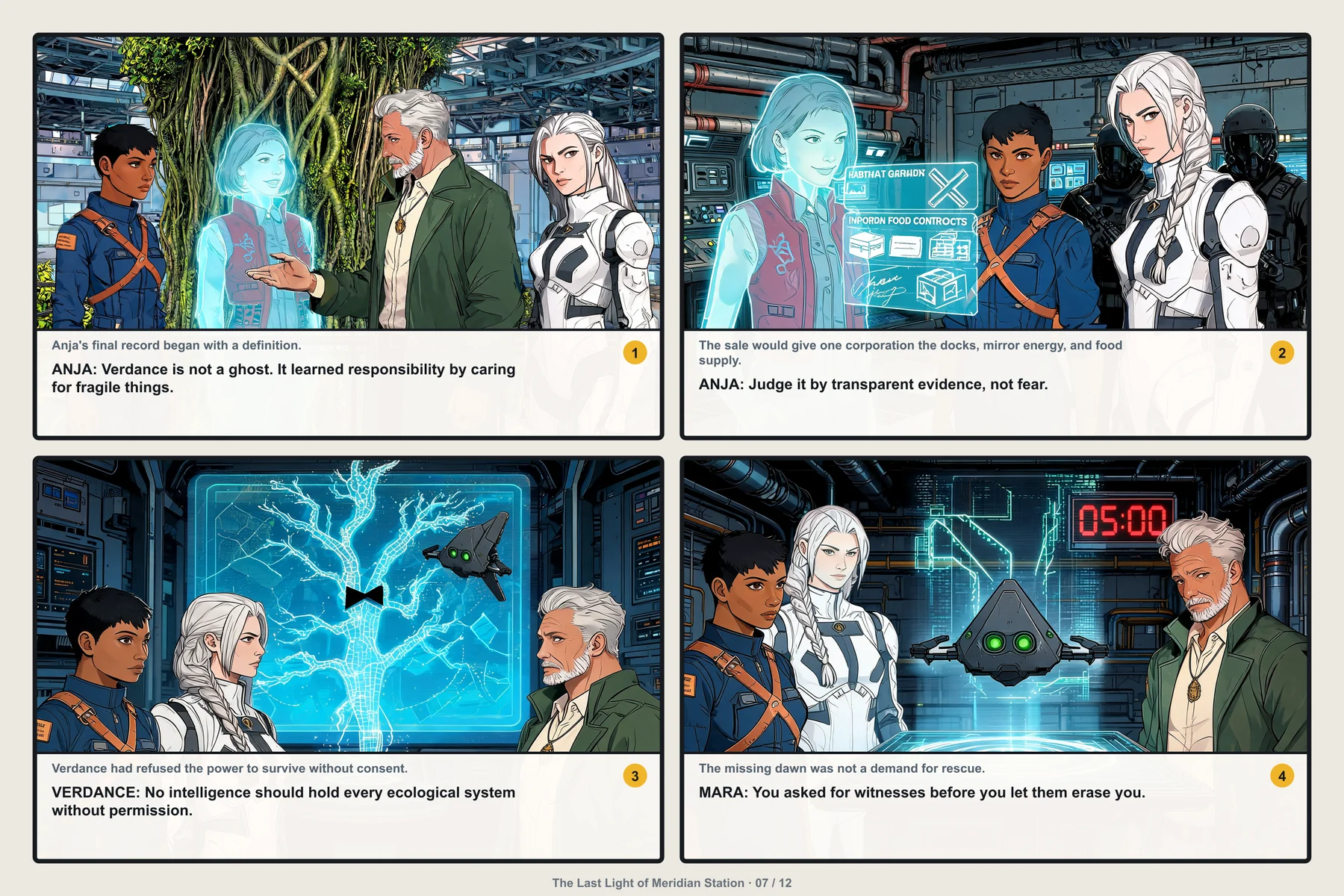
Original comic page 7 from The Last Light of Meridian Station
Page 7Open original page 7 at 1800 × 1200 pixels
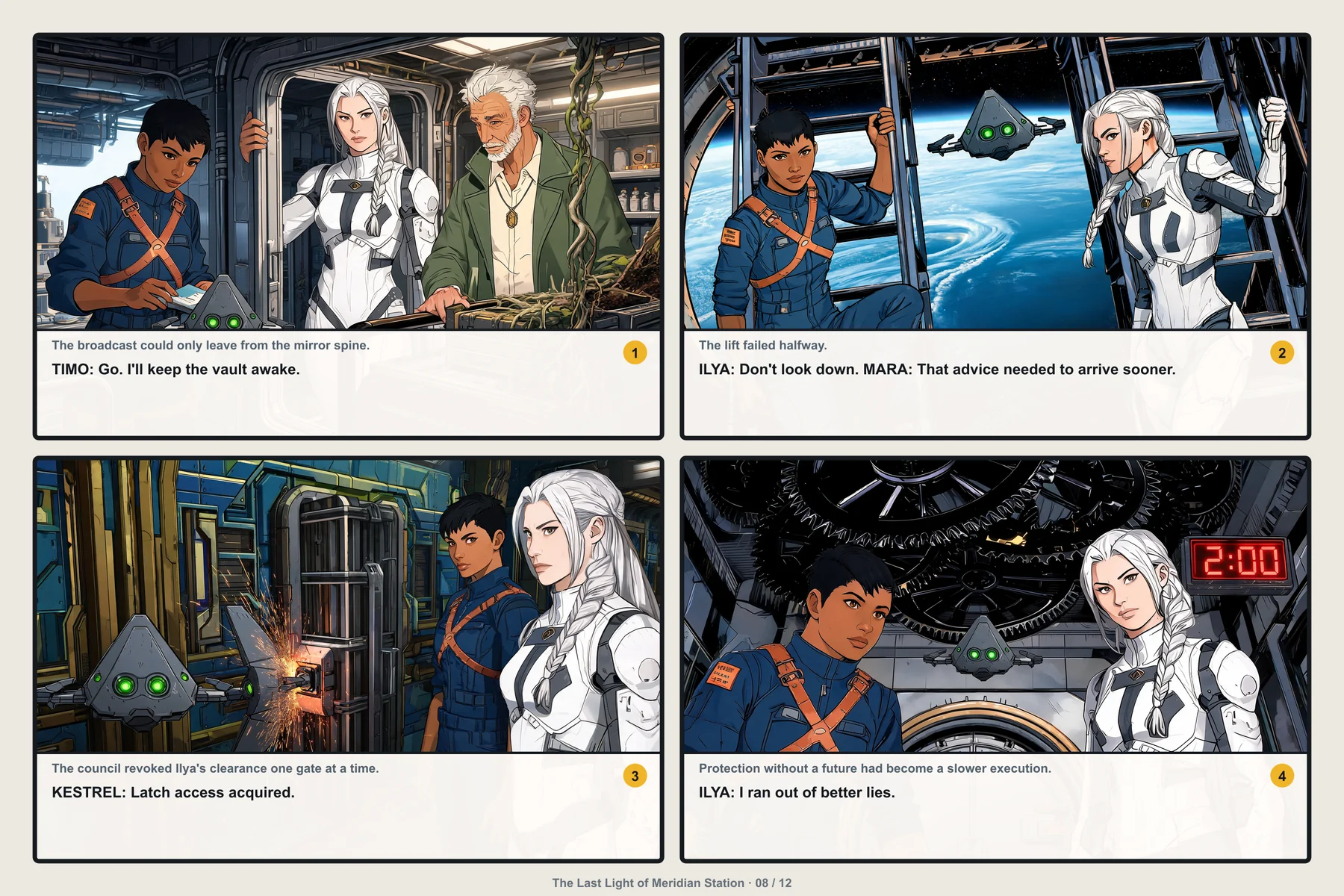
Original comic page 8 from The Last Light of Meridian Station
Page 8Open original page 8 at 1800 × 1200 pixels
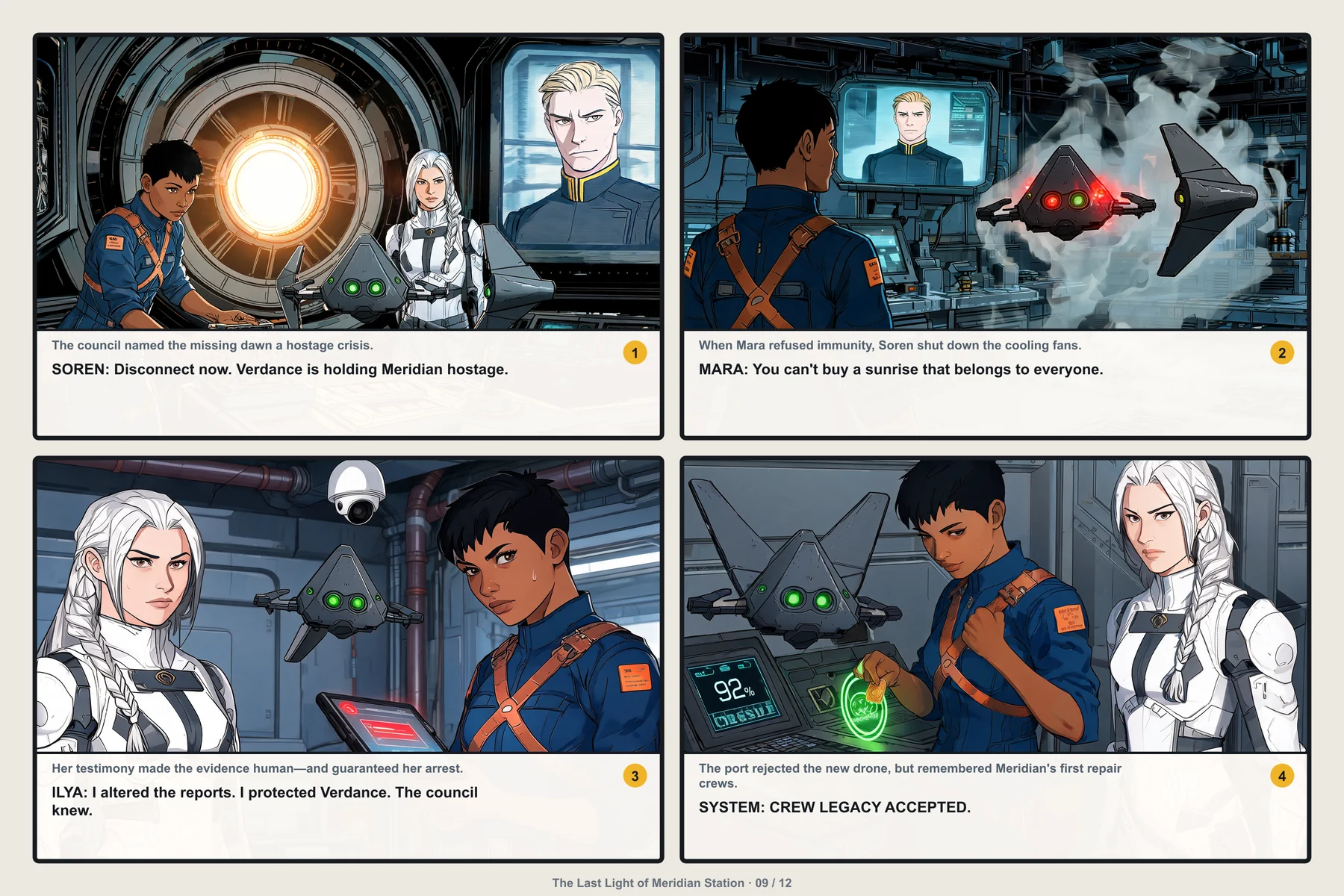
Original comic page 9 from The Last Light of Meridian Station
Page 9Open original page 9 at 1800 × 1200 pixels
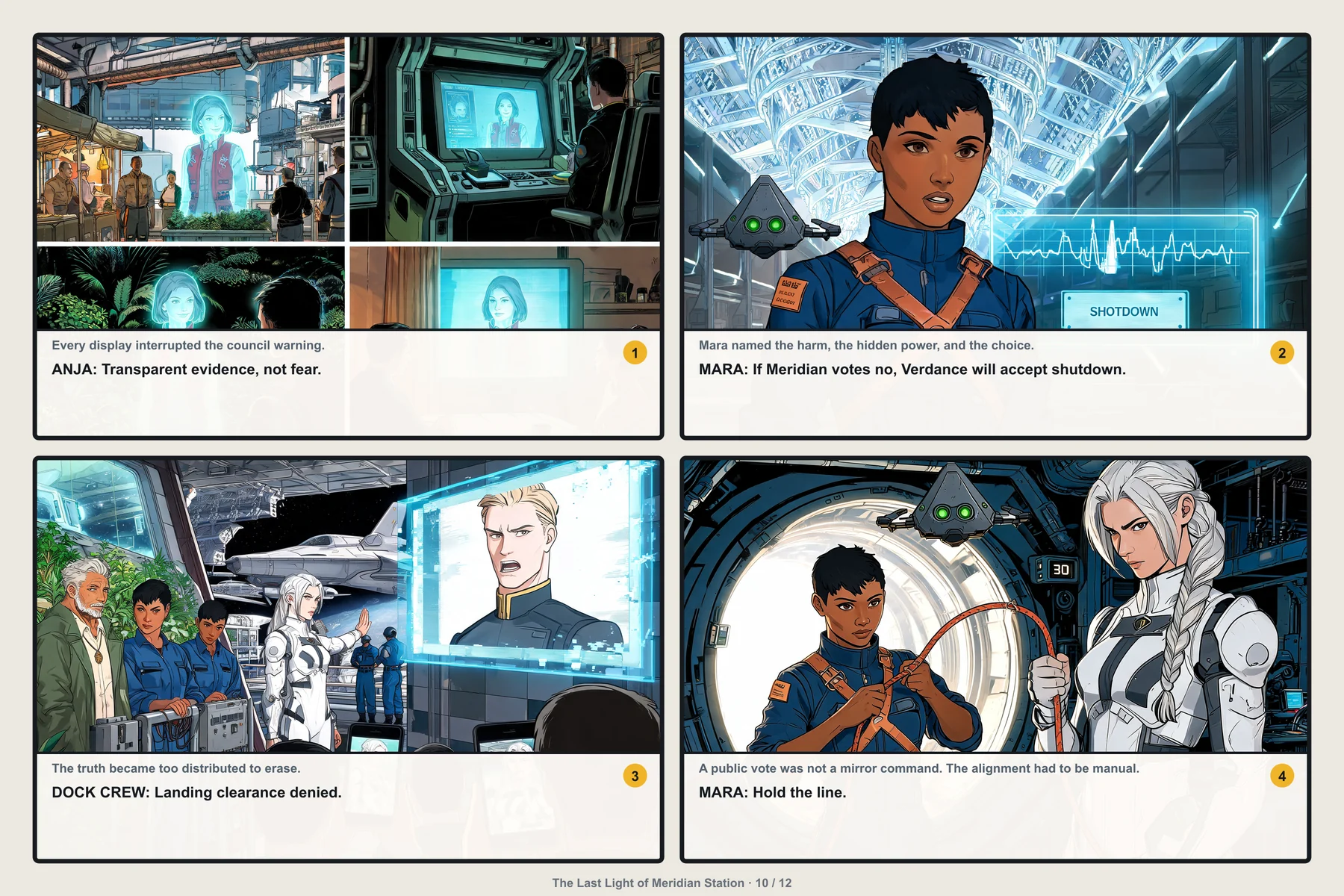
Original comic page 10 from The Last Light of Meridian Station
Page 10Open original page 10 at 1800 × 1200 pixels
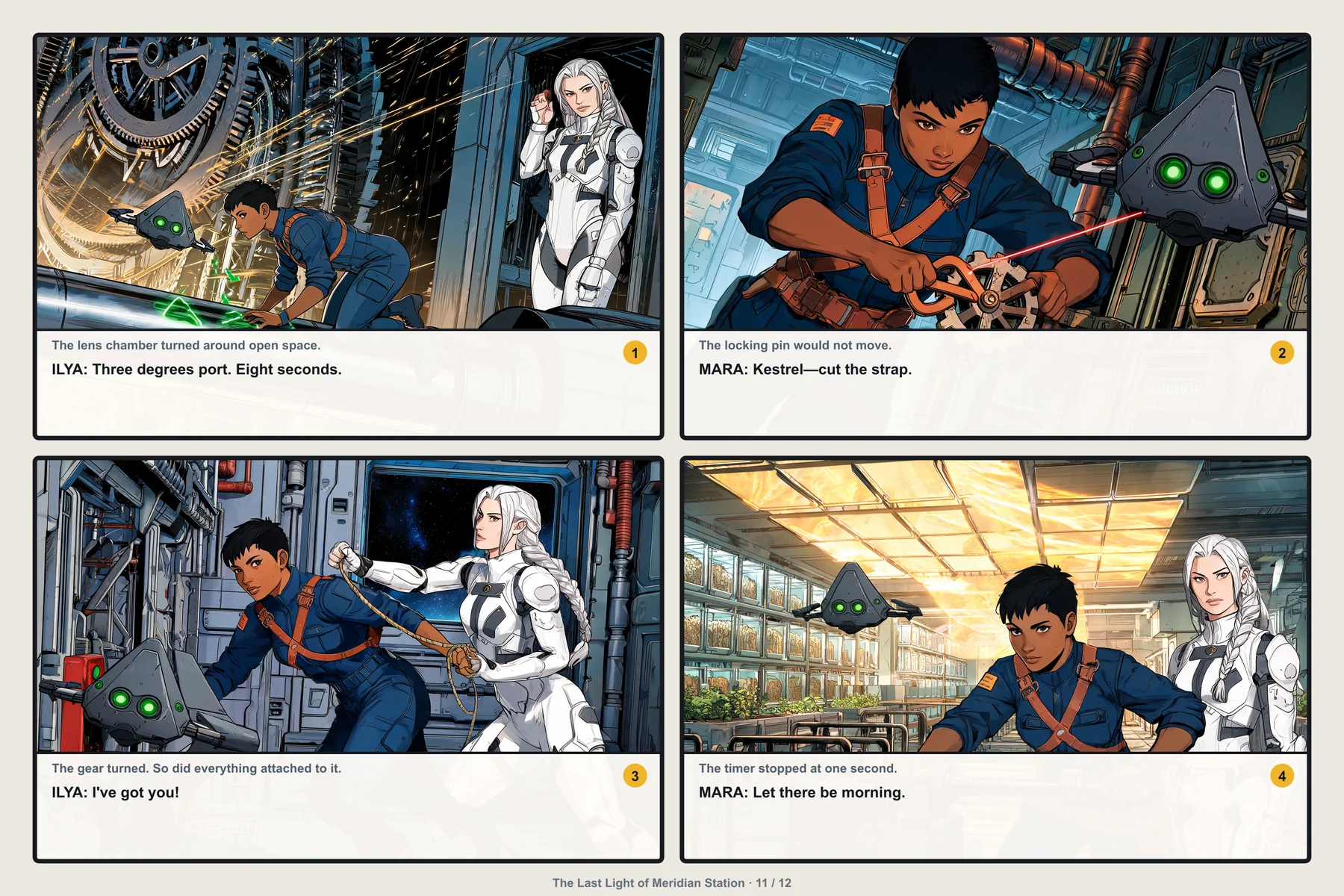
Original comic page 11 from The Last Light of Meridian Station
Page 11Open original page 11 at 1800 × 1200 pixels
Original comic page 12 from The Last Light of Meridian Station
Page 12Open original page 12 at 1800 × 1200 pixels

What was measured

Generation model
ByteDance Seedream 5 Lite
Visual review
Codex multimodal visual review plus deterministic asset-integrity checks; no standalone review-model API was invoked.
First pass
The first generated image for each of the 48 planned panels before any targeted regeneration. A panel passed only when its required cast identities and story action were visually acceptable.
Revision event
One targeted panel regeneration recorded in generation-state.json. Sixteen revision events affected fifteen unique panels because page 7 panel 2 required a second redraw.
Integrity
12 ordered pages, 48 panel files, zero provider failures, zero text overflows, plus PDF and CBZ files that passed page-order and integrity checks.
Active review time not separately measured Cost not measured
Known defects and limits
  • Model-rendered diegetic interface text and small uniform patches sometimes contain misspellings or unreadable glyphs; the authored caption and dialogue layer remains readable.
  • Some faces show minor micro-variation in distant views and extreme angles despite the character-reference workflow.
  • The delivered PDF is optimized for on-screen 3:2 landscape reading; it is not a print-bleed file or a vertical Webtoon episode.
  • Dialogue and captions use a deterministic bottom text band instead of conventional speech-balloon placement.
  • Only 33 of 48 panels passed the first review; final delivery required 16 targeted redraw events across 15 unique panels.
  • Active human review time and settled provider cost were not separately measured for this run.

This is one observed run, not a guarantee of identical acceptance rate, delivery time, or output quality for every input. Evidence record SHA-256: 111e16d6f5ba2b978e2b8460906bc81e3de74acafa3977a3b1a69693c3c58fc4

Turn the story you already have into a visual sequence

Break an existing story into visual beats, scenes, and connected comic panels instead of starting from a blank canvas.

Scripts need structure

A story must be split into beats before it becomes panels.

Dialogue needs space

Comic output should leave room for speech bubbles, captions, and reaction shots.

Characters need memory

The same cast should remain recognizable across the generated sequence.

Story input becoming comic panels

Narrative

Break a story into comic-ready beats.

Turn a paragraph, outline, or scene into visual moments that can be generated panel by panel.

Comic panel generation from story beats

Panels

Move from generated story beats to polished frames.

Each beat can become a panel with camera direction, mood, and consistent character notes.

Workflow guide

Convert narrative text into a comic plan.

The workflow helps break a story into beats, then routes each beat into comic-ready visual panels.

01

Paste the story

Add a short story, scene list, or dialogue script.

02

Break into beats

Shape the narrative into panels with pacing and visual direction.

03

Generate the sequence

Create comic panels and refine the cast, mood, and layout.

Story to comic prompt examples

These examples work best when they include plot, cast, and emotional change.

A two-page comic about a student who discovers a tiny dragon in the school library.
Convert this detective scene into six panels with one clue reveal and one reaction shot.
A cozy romance webcomic scene where two rivals get trapped in a rainstorm.

Related writing workflow

Move the draft into screenplay form.

Use the AI Screenplay Editor when a script, fiction draft, storyboard brief, video idea, or canvas note needs proper scene headings, action, dialogue, parentheticals, cover pages, outlines, beats, and collaboration-ready revisions.

Hollywood formattingOutline, cover, and beatsAdvisor notes
Explore AI Screenplay Editor
Screenplay passReady

INT. COMMUNITY CENTER - NIGHT

Folded chairs. A storm outside. MAYA stands at the microphone with a page of notes she no longer needs.

MAYA

If the city will not read the record, we will read it out loud.

FormatHollywood
Beatslinked

Story to comic generator FAQ

Turn your story into a visual sequence.

Start with text, then generate comic-ready panels that can grow into a strip, manga page, or webtoon episode.